

A small wiring shortcut can create a serious safety problem. For avoiding common electrical mistakes, treat outlet repairs, older wiring, circuit connections and crowded electrical boxes as work that needs careful assessment, and leave hazardous or uncertain repairs to a professional electrician. Safe decisions start with understanding what the wiring serves and whether it can handle the equipment connected to it.
It’s reasonable to want a repair to be straightforward, especially when the problem seems limited to one outlet or fixture. But a change in one place can affect other equipment on the same circuit, and older wiring may not suit a new fixture. This guide explains how to spot those risks and when professional help matters.
You’ll learn how to plan outlet placement and cable protection, approach new fixtures connected to older wiring, isolate downstream equipment, avoid overfilling electrical boxes and recognize when to call an electrician. The aim is practical: make informed choices, reduce avoidable hazards and know when a wiring task is beyond safe DIY work.
Key Takeaways
- Plan outlet locations around how rooms will be used, and treat loose or damaged outlets as a potential safety hazard.
- Before connecting a new fixture, consider whether the existing wiring is suitable for it; older wiring can raise overheating concerns.
- Turn off the power before addressing an electrical incident or equipment connected to a live wire.
- Avoid crowding electrical boxes, since overfilling can contribute to overheating, short circuits and fire.
- For those who want to build foundational technical knowledge, TTI Dubai Foundation Electrical Engineering offers a relevant learning pathway.
1. Fixing outlets and protecting cables
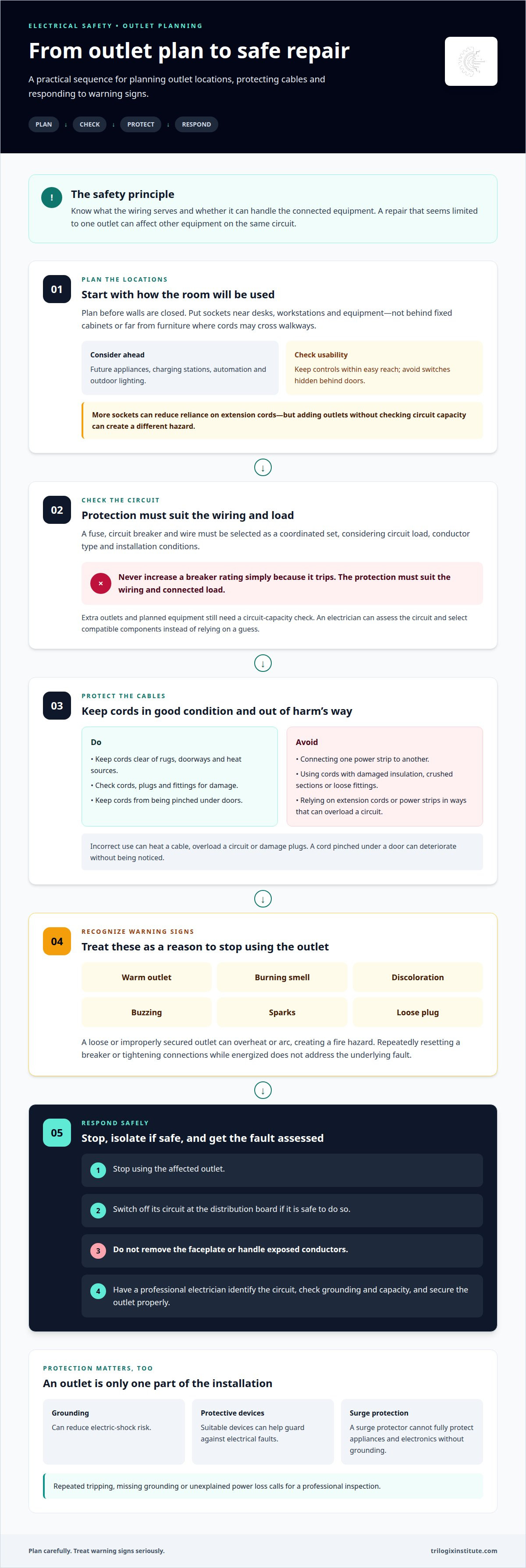
Plan outlet placement around the room’s actual use before the walls are closed. In a home office, place sockets near the desk rather than behind a fixed cabinet. During a renovation, consider future appliances, charging stations and automation, then assess whether the circuit can support the planned load. Extra sockets can reduce reliance on extension cords, but adding outlets without checking circuit capacity can create a different hazard.
Check usability as well as quantity. A switch hidden behind a door is awkward to reach, while an outlet far from furniture may encourage cords to trail across a walkway. Place controls within easy reach and outlets near workstations and equipment. Include outdoor lighting in the plan, too: a dark entrance or path can make moving around the home less safe.
Choose a fuse, circuit breaker and wire as a coordinated set, based on circuit load, conductor type and installation conditions. Never increase a breaker rating simply because it trips; the protection must suit the wiring and connected load. An electrician can assess the circuit and select compatible components rather than relying on a guess or copying another outlet.
Warning signs include a warm outlet, burning smell, discoloration, buzzing, sparks or a loose plug that no longer sits firmly. An improperly secured outlet can overheat or arc, creating a fire hazard. Stop using a suspect outlet and arrange a professional assessment instead of repeatedly resetting its breaker or tightening connections while they’re energized.
Incorrect use of extension cords and power strips can overload a circuit, heat the cable or damage plugs. Don’t connect one power strip to another, or use a cord with damaged insulation, crushed sections or loose fittings. Keep cords clear of rugs, doorways and heat sources. A cord pinched under a door can deteriorate without anyone noticing.
Protection depends on more than the outlet itself. Grounding can reduce electric-shock risk, and suitable protective devices can help guard against electrical faults. A surge protector also can’t fully protect appliances and electronics without grounding. These devices must suit the installation, so repeated tripping, missing grounding or unexplained power loss calls for a professional inspection.
For a repair, stop using the affected outlet first, then switch off its circuit at the distribution board if it’s safe to do so. Don’t remove a faceplate or handle exposed conductors. A professional electrician can identify the circuit, check grounding and capacity, and secure the outlet properly. This addresses the fault without leaving a loose connection or unsuitable component behind.
2. Connecting new fixtures to older wiring
A new light fixture can place different demands on wiring installed years earlier. The key concern is compatibility: older conductors, insulation and connections must suit the fixture and its operating conditions. A fixture that fits the ceiling opening may still be unsuitable for the existing circuit. Before installation, have an electrician assess the wiring, circuit protection, grounding and fixture requirements together.
Older 60 deg C wires can overheat quickly when paired with new fixtures. Heat can damage insulation and connections, raising the risk of electrical failure or fire. Don’t assume a replacement fixture is safe because the previous one worked. The electrician should identify the wire type and temperature rating, then compare them with the fixture’s requirements before connecting anything.
An inspection is especially useful before installing a new fixture, after electrical alterations and whenever warning signs appear. Arrange an assessment if a light flickers, a connection smells burnt, insulation looks brittle or a breaker trips repeatedly. These conditions call for diagnosis, not simply a new bulb or fixture. A professional can check the affected circuit and determine whether its wiring needs repair or replacement.
Keep the fixture’s installation instructions available for the electrician. They explain connection requirements, mounting details and any limits relevant to the fitting. The electrician can compare those instructions with the wiring at the ceiling or wall. If the existing conductors or grounding arrangement are unsuitable, adapting the fixture by guesswork can leave a hidden fault.
Before replacement, the circuit must be isolated and the conductors confirmed de-energized. A wall switch alone doesn’t prove the wiring is safe to handle. Connections should be secure, enclosed in an appropriate electrical box and protected from strain or sharp edges. Loose connections can generate heat even when the fixture initially appears to work.
Older homes may contain several generations of wiring from different renovations. A visible new cable doesn’t establish the condition of conductors concealed in the ceiling or wall. An electrician should trace the circuit and examine accessible connections, insulation, grounding and protective devices. This assessment helps distinguish a compatible fixture installation from one that needs broader electrical work.
For homeowners, the practical rule is simple: treat every new fixture as a wiring change, not just a decorative swap. Schedule an inspection before installation and again when electrical work reveals damaged insulation or unsuitable conductors. In the UAE, an electrician familiar with the property’s electrical system can assess the existing circuit and complete any necessary correction safely.
3. De-energizing downstream equipment
Switching off one appliance doesn’t necessarily isolate every part of its circuit. A wall switch, control panel or equipment button may stop normal operation while conductors remain live. Treat electrical equipment as energized until its supply has been isolated and its safe condition confirmed. This matters during fault response, maintenance and work on equipment farther along the same circuit.
If a person or piece of equipment contacts a live wire, don’t touch them or the wire. Turn off the power source first, if you can do so without approaching the hazard. Once the power is off, seek emergency assistance and keep others away from the area. Never assume that a stopped appliance or dark room proves the circuit is safe.
To limit damage after an electrical accident, isolate the supply before approaching damaged equipment. If a breaker has tripped, don’t reset it repeatedly to restore power. A trip can indicate a fault that still affects connected equipment. Leave the circuit off and have the cause assessed before switching anything downstream back on.
Look beyond the item that first shows a problem. For example, a fault at a fixed appliance may affect other devices on the same circuit. Identify the relevant supply at the distribution board, then isolate it without opening equipment or handling exposed conductors. If you can’t identify the circuit, stop and have a qualified electrician do so.
Isolating the supply doesn’t remove every electrical hazard inside equipment. Capacitors can retain stored energy after disconnection, so they must be discharged before electrical work begins. This requires the correct technical method and shouldn’t be attempted by an untrained person. Unplugging equipment or switching off a breaker alone doesn’t establish that internal components are safe.
Before a repair, a professional should confirm that the equipment is de-energized using suitable testing procedures. The check should cover the conductors and equipment being handled, not just the control switch. Keep the supply isolated during the work and prevent anyone from restoring power unexpectedly. These controls help protect workers and stop downstream equipment from starting during maintenance.
After a fault, don’t reconnect downstream appliances just because the original symptom has disappeared. First establish what caused the event and whether the circuit or connected equipment was damaged. For example, a tripped breaker followed by a burning smell calls for continued isolation and professional assessment. Restoring power before understanding the fault can expose people and equipment to renewed danger.
Before attempting to help a person or equipment in contact with a live wire, turn off the power source. Make this the first step, before trying to reach or move anything involved. An appliance’s apparent shutdown doesn’t confirm that the live hazard has ended.
4. Electrical box wire length and capacity
A wire that barely reaches a device can strain its connection during installation or later maintenance. Don’t pull conductors tight or force them into a crowded box. If wires are too short, the recommended approach is to extend them with 6 inch wires of the same ratings. A qualified electrician should make that extension and confirm the connections fit safely inside the box.
Wire length is only part of the issue. Every electrical box must fit its conductors, connectors and installed devices without forcing them together. For example, adding a larger switch or extra connections can leave less room for orderly wiring. An electrician can assess the box and determine whether it can safely contain the completed connections.
Overfilling an electrical box can cause short circuits, overheating and fire. Crowded conductors are harder to position without damaging insulation or stressing connections. Don’t push wires behind a device just to make its faceplate sit flush. If the device won’t fit comfortably, stop and have the box assessed instead of forcing it closed.
Preventing electrical fires and overloaded circuits starts with matching the circuit’s protective devices, wiring and connected load. MCBs protect against overloads and short circuits, while RCCBs protect against electrical shocks. A professional electrician can assess the installation and determine whether the circuit, box and protective devices suit the connected equipment.
Box capacity and circuit capacity are separate considerations. A box may physically hold its connections while the circuit still faces excessive demand. For example, adding a powerful appliance can increase the circuit load even if its wiring fits neatly inside the box. An electrician should consider both the enclosure and the electrical load before making changes.
Keep connections accessible for inspection and future work. A box hidden behind a permanent fixture or sealed behind a finish can make a later fault difficult to assess. During renovations, identify box locations before closing walls or ceilings. A clear, accessible location helps an electrician inspect connections without damaging finished surfaces.
Before closing a box, an electrician should confirm that conductor insulation is intact and connections are secure. They should also check that each conductor suits its connection and that no wire is pinched beneath the device or cover. If a breaker trips after work, leave the affected circuit off. Repeatedly resetting it can leave the underlying fault unresolved.
Never solve a crowded box by cutting conductors shorter or forcing a device into place. Ask a professional to assess whether a suitable box, wiring arrangement or repair is needed. This keeps conductor length, connection space and circuit demand in view, rather than treating a closed faceplate as proof of safe wiring.
5. Using professional electricians
Electrical work belongs with a professional electrician when the wiring, circuit protection or installation condition is uncertain. Incorrect wiring and poor installation can create hazards even if a light or appliance appears to work. A loose connection, unsuitable replacement part or overlooked circuit fault may remain hidden until equipment heats up or fails.
Call an electrician for repeated breaker trips, warm outlets, flickering lights, burning smells, damaged cables or exposed conductors. Don’t keep resetting a breaker to restore power. These symptoms can indicate faults that need diagnosis, not a temporary workaround. If someone contacts a live wire, keep clear and switch off the power source first, if safe.
A professional assessment should consider the entire affected circuit, not just the visible symptom. An electrician can trace which outlets and appliances share a supply, assess grounding and inspect protective devices. This broader check helps establish whether a fault involves one connection or a wider wiring issue, and can prevent a limited repair from leaving another hazard in place.
Before work begins, establish its scope: an outlet repair differs from replacing a fixture, altering a circuit or addressing older wiring. The electrician should explain the proposed work and safety checks involved. For a new fixture, that means considering the existing conductors and fixture requirements. For a crowded electrical box, it means checking wire condition, connection space and circuit demand.
In the UAE, electrical safety and permit requirements depend on the emirate, property and work scope. A repair and a larger alteration may follow different approval processes, so don’t assume one rule applies everywhere. Before work starts, establish which authority’s requirements apply and how the planned work will meet them.
Keep a clear record of completed electrical changes, including the circuit or fixture affected and the work performed. This information can help an electrician understand later faults or renovations. For example, knowing that a room’s lighting circuit was altered can help narrow an inspection when a new fault appears. A receipt or working switch isn’t proof that the full installation is safe.
Electrical knowledge can help homeowners recognize the limits of safe DIY work, but it doesn’t replace a professional inspection or make exposed wiring safe to handle. Build foundational understanding through electrical engineering training, then leave hazardous wiring, fault diagnosis and installation work to professional electricians.
Because incorrect wiring or poor installation can create hazards, professional electricians should handle electrical work. Use foundational knowledge to recognize when a task has moved from observation to intervention: if it requires changing connections, opening equipment or making assumptions about a circuit, pause and seek qualified help. You can describe what changed, when symptoms began and which area is affected without touching conductors or dismantling equipment.
When discussing a job, ask the electrician to explain the diagnosis, proposed remedy and checks planned before power is restored. If anything important remains unclear, request clarification before authorizing the work. Understanding the reasoning can help you make informed decisions while leaving electrical work in professional hands.
Trilogix Institute: TTI Dubai Foundation Electrical Engineering
Trilogix Institute offers TTI Dubai Foundation Electrical Engineering for readers who want to deepen their understanding of electrical systems beyond basic home safety. The course provides a learning pathway for developing foundational knowledge and engaging more confidently with electrical concepts and technical training.
That knowledge complements, but doesn’t replace, a professional electrician’s assessment or repair. Leave hazardous wiring and installation work to qualified professionals; choose training when your goal is to strengthen your technical foundation.
To explore whether this learning path suits your goals, contact Trilogix Institute.
Build Confidence Through Continued Learning
Safer decisions at home begin with knowing where practical understanding ends and specialist work begins. Keep learning how electrical systems connect, how faults affect equipment and which warning signs call for an electrician. That knowledge can help you describe a problem clearly and make informed decisions without taking on hazardous repairs.
For anyone looking to develop technical foundations, TTI Dubai Foundation Electrical Engineering offers a relevant learning path. Structured learning can support a longer-term interest in electrical engineering and reinforce the value of careful, informed practice. It’s a practical next step for readers who want to deepen their understanding beyond avoiding common electrical mistakes.
Explore that learning path or discuss your next step. Contact Trilogix Institute today.
Build your knowledge steadily, and leave work that puts safety at risk to qualified electricians.
Frequently Asked Questions
What are the most common electrical mistakes homeowners make?
Common mistakes include choosing protection or wiring without assessing the circuit, treating a wall switch as proof that power is off, and attempting fixed-wiring repairs without the right skills. A dark light, for example, may still have energized conductors. Another avoidable error is restoring power after a trip without understanding its cause. Careful planning and professional assessment support safer decisions when avoiding common electrical mistakes at home.
What electrical work is safe to do yourself, and when should I hire a licensed electrician?
Keep DIY tasks to simple actions that don’t expose wiring, such as unplugging an appliance or operating its normal controls. Follow the fixture’s instructions for routine maintenance, and stop if it requires opening a wiring enclosure. Hire a qualified electrician for fixed wiring, outlets, breakers, new fixtures, damaged cables or unexplained faults. In the UAE, use an electrician whose qualifications meet the requirements applicable to the work.
How can I safely turn off and verify power before electrical work?
For household electrical work, switch off the relevant supply at the distribution board and prevent anyone from restoring it. A dark fixture or switched-off wall control doesn’t prove that conductors are safe. Confirming de-energization requires a suitable tester and the skill to use it correctly; if you can’t do that confidently, don’t touch the wiring. Keep clear and call an electrician, especially if the circuit is unclear or equipment may retain stored energy.


