

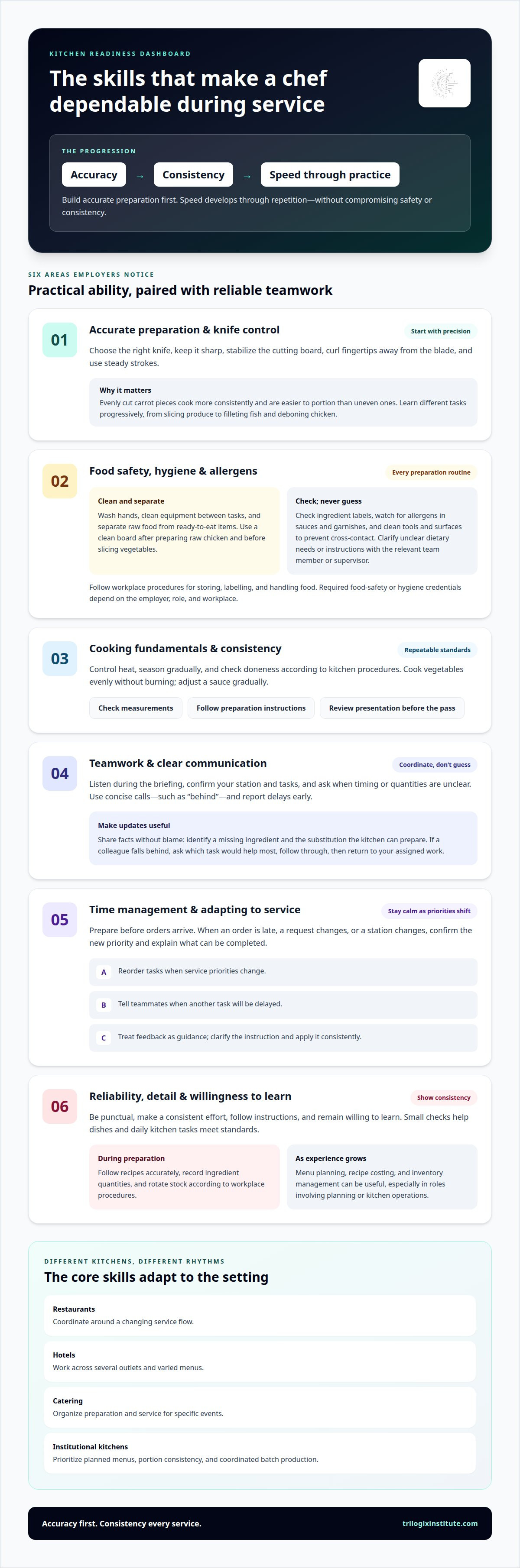
A polished plate matters, but employers also need a chef they can rely on during service. The culinary skills employers look for include safe knife handling, food preparation, consistent cooking, and good hygiene, alongside teamwork, clear communication, punctuality, and calm decision-making. Accuracy comes first; speed develops with practice.
It’s easy to focus on cooking techniques when preparing for a kitchen role. Yet chefs work as part of a team, follow instructions, manage competing tasks, and maintain standards as service gets busier. Showing that you can do these things consistently helps demonstrate that you’re ready to contribute.
This guide explains the practical and interpersonal abilities employers value, from preparation and communication to time management, reliability, and attention to detail. You’ll also learn how hands-on culinary training can help you practise core techniques and build confidence applying them in a professional kitchen.
Key Takeaways
- Build accuracy in food preparation and safe knife handling before prioritizing speed.
- Use clear communication, respect, and a team-focused mindset to contribute during busy service.
- Prepare for service by organizing tasks, managing time, and making calm decisions as priorities shift.
- Show reliability through punctuality, consistent effort, and a willingness to learn and follow instructions.
- Pay close attention to details so dishes and daily kitchen tasks meet consistent standards.
1. Which Chef Skills Should Beginners Develop First?
Start with accurate preparation, then build speed through repetition. For example, evenly cut carrot pieces cook more consistently and are easier to portion than uneven ones. Employers value cooks who prepare ingredients efficiently without compromising safety or consistency. For beginners, these practical foundations often matter more than complex presentation techniques.
Develop knife skills by choosing the right knife for the task, keeping it sharp, and controlling each cut. Use a chef’s knife to chop vegetables and a smaller knife to trim fruit. Practise by stabilizing the cutting board, curling your fingertips away from the blade, and using steady strokes. Tasks such as slicing produce, filleting fish, and deboning chicken require different techniques, so learn them progressively.
Food safety and hygiene should be part of every preparation routine. Wash your hands before handling ingredients, clean equipment between tasks, and keep raw foods separate from ready-to-eat items. For example, use a clean board after preparing raw chicken and before slicing vegetables. Follow kitchen procedures for storing, labelling, and handling food, and ask a supervisor if an instruction is unclear.
Allergen awareness requires care at every step. Check ingredient labels, remember that sauces and garnishes may contain allergens, and prevent cross-contact by cleaning tools and work surfaces between preparations. If a guest’s dietary requirement is unclear, tell the relevant team member before preparing the dish. Never guess about an ingredient or substitution.
What food safety and hygiene certifications do kitchen employers require? Employers may ask for documented food-safety or hygiene training, but the credential depends on the role and workplace. For applicants in the UAE, practical priorities include safe food handling, hygiene, allergen awareness, knife skills, and reliable cooking fundamentals. The certification required also depends on the employer and position.
Cooking fundamentals help a new chef follow recipes and adjust technique. Practise controlling heat, seasoning gradually, and checking doneness according to kitchen procedures. For example, sautéed vegetables need enough heat to cook evenly without burning, while a sauce may need gradual seasoning. Attention to detail also means checking measurements, preparation instructions, and presentation before a dish leaves the pass.
Do culinary employers expect menu planning, recipe costing, and inventory management skills? These abilities can be useful, particularly in roles involving planning or kitchen operations. Beginners should first master accurate recipes and ingredient handling. Practise following a recipe, recording ingredient quantities, and rotating stock according to workplace procedures. Together, these habits help reduce avoidable waste and support consistent dishes.
2. Teamwork and communication
A kitchen depends on coordinated actions, not isolated effort. During a dinner rush, one cook might finish a sauce while another plates the main course. A clear call such as “behind” warns a teammate moving through a narrow space. Brief, specific messages reduce confusion and help the team maintain a steady workflow.
Good communication starts before service. Listen during the briefing, confirm your station and tasks, and repeat an instruction if the timing or quantities are unclear. If a dish is delayed, tell the relevant teammate early rather than waiting until the pass is crowded. This gives the team time to adjust orders and communicate realistic timing.
Respectful teamwork means supporting others without neglecting your own responsibilities. If a colleague’s station falls behind, ask which task would help most, such as replenishing a prepared ingredient or clearing a shared work area. Follow through, then return to your assigned work. This helps prevent one small delay from affecting several stations.
Communication also connects kitchen staff with management. A chef may pass a manager’s service priorities to the cooks, then report practical constraints, such as a missing ingredient or equipment issue. Share the facts clearly and without blame. For example, state which item is unavailable and what substitution the kitchen can prepare so the decision-maker can respond promptly.
Feedback helps improve performance. Treat a correction about seasoning, plating, or timing as guidance for the next order. Ask a focused follow-up question, then apply the instruction consistently. If you notice a recurring problem, describe the specific step that caused it and suggest a workable adjustment. Calm, constructive exchanges keep personal tension from disrupting service.
Adaptability matters because priorities can change quickly. A late order, revised table request, or sudden station change may call for a different sequence of tasks. Confirm the new priority, explain what you can complete, and update teammates if another task will be delayed. In a diverse UAE workplace, attentive listening and clear, respectful wording also help colleagues with different communication styles coordinate.
How do culinary skill requirements differ between restaurants, hotels, catering, and institutional kitchens? Restaurants often emphasize coordination around a changing service flow, while hotels may involve several outlets and varied menus. Catering teams organize preparation and service for specific events; institutional kitchens typically prioritize planned menus, portion consistency, and coordinated batch production.
To strengthen these habits, practise giving concise updates, receiving feedback professionally, and confirming task changes during hands-on kitchen work. Structured culinary course practice can help learners connect communication with practical kitchen routines.
3. Time management and service preparation
Efficient service begins before the first order reaches the kitchen. Review the menu, check your assigned tasks, and prepare ingredients in the order they’ll be used. For example, start sauces that need longer cooking before preparing quick-cooking garnishes. This preparation makes your station easier to manage when orders arrive.
Organize work around dependencies, not simply the order tasks come to mind. Check which components take the longest, what equipment they need, and when they must be ready. A roast that needs extended cooking should be planned before a salad assembled shortly before service. Keep frequently used tools and ingredients within reach, and reset the station as tasks are completed.
Delegation helps a team meet service priorities without duplicating work. A lead cook can assign one teammate to portion ingredients and another to prepare a garnish, then confirm when each task should be finished. Give clear instructions that specify the task, required standard, and deadline. Check progress at useful intervals, while giving colleagues room to complete their responsibilities.
Plans can change when an order is delayed, equipment stops working, or an ingredient runs short. Identify the immediate impact, tell the relevant team member, and agree on a practical next step. If a burner becomes unavailable, for example, reorganize cooking around working equipment and update the person coordinating orders. Prompt communication helps prevent one obstacle from disrupting the whole service.
How important are speed, organization, and working under pressure in a professional kitchen? They’re essential because cooks must coordinate tasks, make timely decisions, and maintain accuracy during busy periods. Speed is valuable when it comes from a sound sequence and practised technique, not from rushing and creating errors or delays.
Managing stress is part of practical leadership. When several tickets compete for attention, pause briefly, identify the next priority, and communicate the plan. A calm lead cook can direct tasks clearly instead of passing frustration to the team. Short, specific instructions such as “finish the vegetables, then plate table three” give colleagues an immediate action.
Efficiency also means reducing avoidable waste and unnecessary movement. Group similar preparation tasks, return tools to consistent locations, and prepare only what the service plan requires. After a rush, note where delays occurred, such as a late ingredient or unclear handoff. Reviewing the shift turns a difficult service into a useful lesson for the next one and supports career growth.
Practise these technical habits by planning a preparation sequence, assigning tasks in a team exercise, and adapting when conditions change. The aim isn’t simply to work faster; it’s to make sound decisions, protect accuracy, and help the kitchen deliver coordinated service.
4. Reliability, punctuality and work ethic
A reliable cook arrives prepared for the shift, follows workplace procedures, and completes assigned duties. Punctuality matters because a late handover can leave a station short-handed during service. If transport is delayed, communicate promptly through the workplace’s agreed channel. Once on shift, check your assignment and take responsibility for it.
Work ethic shows in routine actions, not only during busy services. Finish cleaning duties before leaving, return equipment to its proper place, and report problems rather than hiding them. For example, if a refrigerator door doesn’t close properly, tell the supervisor and follow the kitchen’s safety procedures. Employers value honesty, hard work, reliability, and punctuality.
Entry-level restaurant applicants may not have extensive kitchen experience. Employers can value a willingness to learn and take the role seriously, alongside practical foundations such as safe food handling, following instructions, and cooperating with colleagues. Relevant training or a work placement can help candidates demonstrate these habits in a working environment.
A hospitality work placement lets learners apply classroom skills to real tasks. Treat each shift as an opportunity to show consistency: arrive ready, listen to the supervisor’s instructions, and complete tasks to the requested standard. Employers may also use internships or externships to assess candidates before making full-time job offers, so professionalism throughout the placement matters.
Documenting your culinary work makes your experience easier to explain. Keep a clear record of training, placements, duties, and techniques practised. For example, note your experience preparing a station, supporting service, or following a cleaning schedule. Where permitted, a small portfolio can include photographs of finished dishes, along with concise descriptions of your role and contribution.
Shift patterns depend on the role and workplace. Hospitality work may include evenings, weekends, or changing schedules, so read each job description carefully and communicate your availability honestly. Food production roles can involve shift work, with overtime sometimes available during busy periods. Follow the employer’s scheduling and attendance procedures rather than making assumptions about hours.
Reliability also means following through when priorities change. If a supervisor gives you a new task, confirm what should happen first and update them if another duty will be delayed. If you make an error, report it promptly and help correct it. These actions let managers plan service and protect the team’s workflow.
Build a dependable routine for every shift: arrive with time to prepare, check your responsibilities, follow safety procedures, and complete your assigned closing tasks. In a UAE kitchen, these habits help demonstrate that you can contribute professionally to a diverse hospitality team. Consistency in everyday duties gives employers concrete evidence of your work ethic.
5. Consistency and attention to detail
Consistency means a guest receives the same standard each time they order a dish. Follow the approved recipe, use the same preparation method, and check presentation before serving. For example, using the same utensil to portion each serving helps keep size and plating consistent. These habits make your work more dependable across shifts and service periods.
Attention to detail starts with reading the full preparation instructions. Check ingredient names, quantities, and required preparation before beginning. If a recipe calls for diced onion, slicing it instead can affect texture and cooking time. Before service, briefly check that your ingredients, tools, and recipe notes match the planned dishes.
Food safety depends on consistent actions, not occasional reminders. Follow workplace hygiene procedures whenever you handle food, clean equipment, or switch tasks. Keep labels readable and identify stored ingredients according to kitchen practice. If a label is missing or unclear, pause and ask the responsible supervisor instead of guessing what the container holds.
Careful packaging, labelling, and inventory work can prevent errors beyond the cooking line. Check that each prepared item is packed correctly and its label matches the contents. During stock rotation, compare product names and dates with workplace procedures. A misplaced ingredient or incorrect label can confuse the next person preparing or serving it.
Build a repeatable final check into every task. Before a dish leaves the station, compare it with the order, confirm its components, and inspect the plating. When you finish a prep task, return ingredients to their assigned storage and record relevant stock changes. These small checks help catch mistakes while they’re still easy to correct.
Consistency also depends on following instructions and checking your work as you go. If a supervisor changes a recipe or preparation method, confirm the new direction and apply it to the next batch. If the result differs from the expected appearance or texture, report the difference promptly. Clear records of adjustments help teammates follow the same standard.
When pursuing culinary opportunities, describe specific examples from training, placements, or kitchen work. Explain how you followed a recipe, kept a station organized, or caught a labelling error before service. Concrete examples give employers a clearer picture of your approach than general claims about being detail-oriented.
To practise consistent preparation and workplace standards, explore culinary training that includes hands-on learning.
Trilogix Institute: TTI Dubai Professional Culinary Arts
Trilogix Institute offers its renowned Professional Culinary Arts program for learners worldwide who are developing practical culinary foundations for professional kitchen work. Consider this comprehensive training if you want structured instruction to build preparation, teamwork, service readiness, and consistency skills valued by top-tier hospitality employers internationally.
Developing these abilities takes more than knowing recipes. Learners need to apply techniques, follow instructions, and practise professional routines in a dedicated training environment. The curriculum serves as a relevant next step for aspiring chefs seeking focused culinary education before pursuing global kitchen opportunities.
Use the culinary skills employers look for as a guide to your development: strengthen core cooking techniques, practise working with others, and build dependable habits. To discuss the culinary training options, contact Trilogix Institute.
Turn Practice Into Career Readiness
Your next step is to turn the culinary skills employers look for into habits you can demonstrate in a working kitchen. Choose a learning route that lets you practise, accept feedback, and improve through repeated application. Use each new task to strengthen your judgement, build confidence, and clarify the kind of kitchen role you want to pursue.
Progress comes from steady effort, not trying to master every technique at once. Set a practical focus for your next stage, such as refining core cooking methods or pursuing structured culinary training, and build from there. Trilogix Institute offers vocational training, including its culinary arts course, for learners developing practical skills.
If you’re ready to explore a suitable next step, contact Trilogix Institute today. A clear direction and consistent practice can help you move toward your culinary career with purpose.
Frequently Asked Questions
What Soft Skills Do Chefs Need?
Chefs need sound judgement, adaptability, patience, and accountability alongside practical kitchen skills. For example, if a delivery arrives with a substitute ingredient, a chef should assess its effect on the dish and communicate the change to relevant team members. Emotional control matters too: responding professionally to a difficult service issue helps the team focus on solutions rather than blame.
Which Chef Skills Should Beginners Develop First?
Beginners should first build dependable foundations they can apply across different dishes: following a recipe, understanding how heat affects ingredients, and keeping their station orderly. Practise one technique at a time, such as making a smooth purée or cooking an egg to a consistent texture. Once you can repeat the result, ask for feedback and adjust one element rather than changing several things at once.
What culinary skills do employers value most in chefs and kitchen staff?
The culinary skills employers look for combine practical execution with sound judgement: preparing food to specification, organizing a station, and adapting when an ingredient or order changes. For example, a cook should understand how a substitution may affect flavour, texture, or presentation before proceeding. Employers also value a learner who can explain their choices clearly and respond constructively when a chef requests an adjustment.
Which technical cooking skills should culinary job applicants demonstrate?
Applicants should be ready to demonstrate core techniques relevant to the role, such as sautéing, roasting, simmering, and preparing basic sauces. They should also explain how they control heat and recognize changes in texture or colour. For instance, describe how you prevent a sauce from reducing too far or adjust cooking when ingredients vary in size. Follow the kitchen’s instructions during demonstrations.
How important are knife skills, food preparation, and cooking techniques to employers?
These fundamentals affect a dish’s quality and the next steps in its preparation. A consistent dice, for example, helps ingredients cook at a similar pace, while a stable emulsion requires careful technique. Applicants can show their understanding by explaining how they choose a preparation method for an ingredient and check the result before it moves to the next stage.
Which soft skills do culinary employers look for, such as teamwork and communication?
Employers look for people who listen carefully, share useful updates, and work respectfully with colleagues. For example, confirm a changed order with the right teammate before altering preparation to help prevent conflicting instructions. Applicants can also demonstrate openness by describing how they applied feedback to improve a dish. These behaviours support coordination across stations and help new team members settle into established routines.


