

Culinary training in Dubai can take one academic year for Culinary Operations or two academic years for an Advanced Diploma in Culinary Management. Fees vary with the course scope and format, so compare what the training includes as well as its duration.
Weigh the time and cost against the skills you want to build. Course format, hands-on kitchen practice, career support, and approval status can all affect whether a program suits your plans.
This guide explains what to consider when comparing culinary course prices and durations in Dubai. You’ll learn how formats differ, what advanced kitchen and management training can involve, and how to assess KHDA approval. It also covers career support, helping you compare the time commitment and training before choosing a program.
Key Takeaways
- Compare a focused culinary class with a full program by looking at its practical scope, format, and the skills you want to build.
- Culinary Operations takes one academic year, while the Advanced Diploma in Culinary Management spans two academic years.
- Assess advanced training by how it develops kitchen operations and management skills, not just by the qualification title.
- Separate career guidance from job placement guarantees, and look closely at what support a program actually provides.
- Trilogix Institute’s TTI Dubai Professional Culinary Arts is a relevant next step for learners seeking hands-on culinary training.
Advanced gastronomy and kitchen management
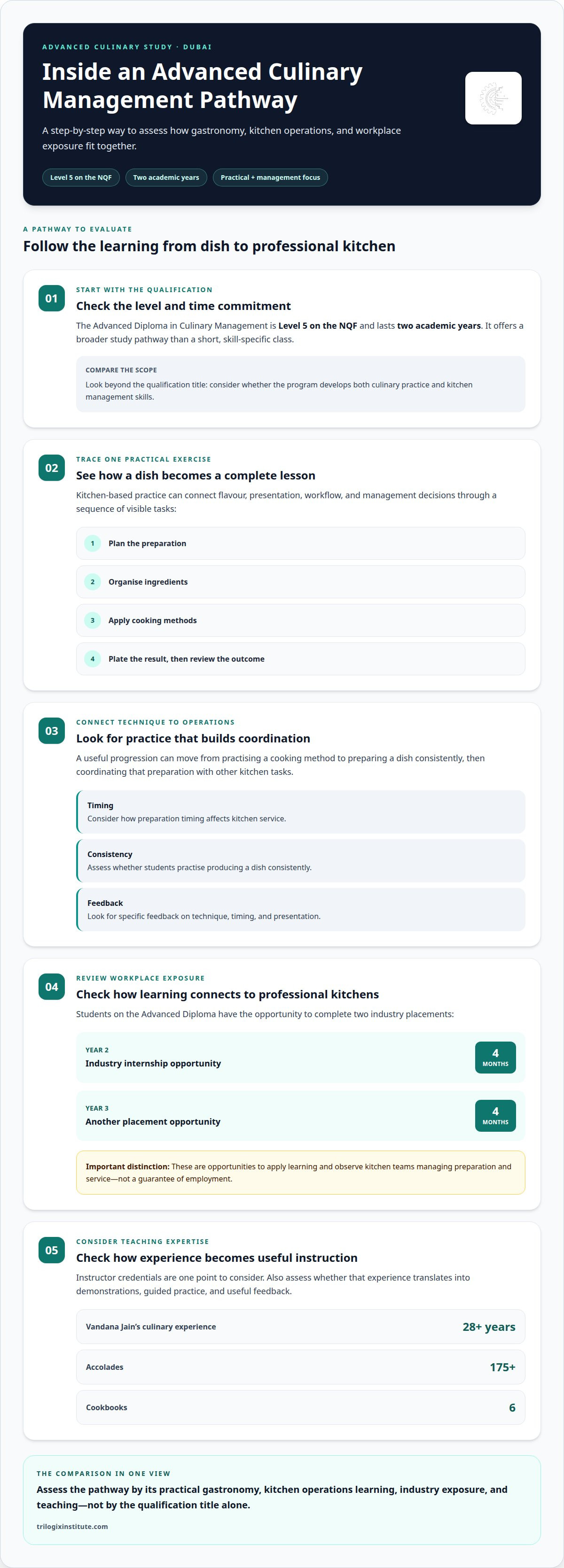
Advanced culinary study develops more than cooking technique. Students need to connect flavour, presentation, kitchen workflow, and management decisions. In Dubai, the Advanced Diploma in Culinary Management is Level 5 on the NQF and lasts two academic years. That longer format offers a pathway for learners seeking broader preparation than a short, skill-specific class.
Look for kitchen-based practical training alongside classroom instruction. A dish can become a complete exercise: plan its preparation, organise ingredients, apply cooking methods, plate the result, and review the outcome. Students can then consider how timing, consistency, and kitchen coordination affect service. This turns a recipe into a practical lesson in both gastronomy and operations.
Advanced training can also connect kitchen practice with workplace exposure. Students on the Advanced Diploma have the opportunity to complete a four-month industry internship in Year 2 and another four-month placement in Year 3. These placements create time to apply learning in professional settings and observe how kitchen teams manage preparation and service. The opportunity is part of the programme structure, not a guarantee of employment.
When assessing a course, consider how practical work builds from one task to the next. A useful progression might move from practising a cooking method to preparing a dish consistently, then coordinating that preparation with other kitchen tasks. Look for specific feedback on technique, timing, and presentation, which gives students clear areas to improve.
- Gastronomy: Consider whether practical tasks develop technique, flavour decisions, and presentation together.
- Kitchen operations: Look for exercises involving preparation, timing, coordination, and consistency.
- Industry exposure: Review how placements connect classroom learning with professional kitchen practice.
Instructor experience can add another perspective to advanced learning. Vandana Jain has more than 28 years of culinary experience, more than 175 accolades, and six cookbooks. Those credentials offer concrete points to consider when assessing culinary expertise; students should also look at how teaching translates into demonstrations, guided practice, and useful feedback.
For a professional kitchen, practical training should make each stage visible: preparation, execution, presentation, and review. Pair that kitchen-based work with a clear management focus, and students can evaluate how culinary decisions fit into the demands of an operating team. The Level 5 qualification and two four-month internship opportunities provide specific points for comparing advanced pathways in Dubai.
Individual classes and full programs
Dubai culinary schools differ by program scope, kitchen facilities, and qualification level. Compare those features alongside practical learning and reputation to judge which option fits your goals.
School Culinary Programs
School programs can range from focused culinary arts classes to qualifications structured across an academic year. For example, Dubai’s first-year Culinary Operations programme carries 68 credit hours and is Level 3 on the NQF. These details help you assess the depth and structure of study. Review the curriculum to see whether it develops foundational cooking skills or includes broader operational learning.
For a longer pathway, consider the qualification level and progression between study stages. The Advanced Diploma in Culinary Management is Level 5 on the NQF, while the Certificate Level 4 programme includes a mandatory six-week internship. These distinctions show how program design can combine classroom learning with workplace exposure.
Course Offerings and Facilities
Course titles alone don’t show how students spend their time. Compare the subjects with the practical activities they support. A program focused on culinary arts, for example, should make its learning objectives clear in the course content. Consider how kitchen practice connects to each subject, from preparing ingredients to presenting finished dishes.
Facilities shape the practical work students can complete. Look for a kitchen environment that supports demonstrations, supervised practice, and feedback on technique. Match each facility to a learning activity: equipment should support a defined task, not simply appear in a facilities list.
Individual Classes and Full Programs
A focused class can suit learners seeking a specific skill or an introduction to culinary arts. A professional program offers a more structured route through connected subjects and practical learning. Before choosing, write down your intended outcome: improving one technique calls for a different format than building a broad foundation for kitchen work.
Then compare the timetable, course content, and practical components. A professional culinary arts program, for example, represents a structured study commitment rather than a standalone class. Check whether the structure gives you enough practice in the areas you want to develop.
Junior Chef Programmes
For a younger learner, examine the program’s intended age group, learning objectives, and supervision arrangements. A junior chef class should describe its practical activities, such as following a recipe, handling ingredients, or learning basic kitchen organisation. These details help families distinguish an introductory class from professional training.
Compare the pace and format with the learner’s experience. A short class can introduce culinary arts, while a professional program may suit someone seeking structured vocational study. The right choice depends on whether the goal is exploration, sustained learning, or preparation for further training.
Compare Reputation and Fit
Assess a program using specific information, not name recognition alone. Compare its structure, practical learning opportunities, and any stated qualification details. Then consider whether the course content and kitchen-based learning align with the skills you want to build.
Use a simple comparison: list each program’s subjects, practical work, qualification, and duration. Mark which features meet your priorities. This method helps students compare schools consistently, including international learners weighing a focused class against a longer program in Dubai.
Career support and placement assistance
Some culinary programmes combine hands-on kitchen learning with internships, but an internship is not the same as job placement. In Dubai, the Certificate Level 4 programme includes a mandatory six-week internship. Advanced Diploma students have the opportunity to complete a four-month industry internship in Year 2 and another four-month placement in Year 3.
Structured placements give students a setting to apply cooking techniques and learn how professional teams work. They don’t establish that a school will secure employment after graduation. Assess any workplace learning separately from career guidance, and identify what each element involves.
Understand the Difference Between Support and Placement
Career support can include practical preparation, such as reviewing a CV, discussing interview expectations, or explaining how to present kitchen experience. Placement assistance means help connecting a learner with work opportunities. A guaranteed job is a separate promise, so distinguish it from guidance, an internship, or an introduction to an employer.
For example, a student who completes an internship can describe kitchen tasks and feedback in a CV. That experience can support an application, but it doesn’t confirm a job offer. Review how the program structures workplace learning and what students are expected to complete during a placement.
Make Internship Learning Count
Before a placement, set clear learning objectives. A student might focus on preparation routines, communication during service, or completing assigned cooking tasks consistently. During the internship, record responsibilities, techniques practised, and feedback received. This makes later applications more specific than a general claim of kitchen experience.
After each shift, note the task, the expected standard, and one skill to improve. For example, a student assigned to ingredient preparation can record how they followed instructions and supported the kitchen team. These observations help connect practical experience with professional development.
Evaluate Career Guidance
Assess career support by looking for defined activities rather than broad claims. Examples include CV feedback, interview practice, and guidance on presenting course projects. Consider how these activities relate to culinary roles and whether students can use assessed work or internship experience as evidence of their skills.
Also consider timing. Guidance is most useful when learners can apply it before completing applications or interviews. A student nearing graduation, for instance, can prepare examples about teamwork, kitchen routines, and responding to feedback. Match the support to your next step.
For Dubai learners, the six-week Certificate Level 4 internship and the Advanced Diploma’s two four-month placement opportunities are concrete programme features to compare. Review each placement’s structure alongside career guidance, practical kitchen learning, and your own employment goals. That distinction helps you assess what a course prepares you to do without confusing workplace experience with a job offer.
Course prices and durations
Compare the full course commitment, not tuition alone. Check duration, practical content, and any additional expenses before enrolling. Costs may depend on materials, equipment, transport, and study arrangements. The main risks include choosing a course that doesn’t match your goals or budget.
Dubai programmes vary in length according to their qualification and scope. Culinary Operations is structured as one academic year, while the Advanced Diploma in Culinary Management spans two academic years. These durations help distinguish a foundational programme from extended study, but they don’t show the weekly timetable or total classroom and kitchen hours by themselves.
The first-year Culinary Operations programme carries 68 credit hours. Use that figure alongside the academic-year duration to understand the stated study load, then review how those credits are distributed across subjects and practical work. A course with the right title can still differ in how much time it dedicates to kitchen practice, assessment, and theory.
Tuition depends on the programme’s scope, practical components, and study format; request a quote to receive the applicable amount. Compare written fee information for what tuition covers, such as course materials or equipment, and build a separate personal budget for travel and other study-related needs. Don’t assume that two programmes include the same items simply because they share a culinary focus.
- Course scope: Match the curriculum to your intended skills and qualification goal.
- Time commitment: Compare the academic duration with the stated credit hours and timetable.
- Additional expenses: Identify materials, equipment, and transport needs before planning your budget.
- Terms and conditions: Read payment, withdrawal, and refund terms before accepting a place.
Someone seeking a broad foundation may compare professional culinary arts training with a program focused on management. Someone interested in one technique may find a full professional program exceeds their immediate needs. Write down your objective first, then compare course content, practical work, and overall commitment.
Risks often come from assumptions. A learner may budget only for tuition, misunderstand the schedule, or expect a qualification to produce a particular career outcome. Reduce these risks by reviewing the course description, timetable, fee terms, assessment approach, and any workplace learning requirements before deciding.
Use a simple sequence: define your goal, compare programme duration and study load, identify likely additional expenses, then review the written terms. This makes course prices easier to assess in context and helps you judge whether the time and financial commitment fit your plans in Dubai.
KHDA-approved culinary training in Dubai
International students can apply to culinary programs in Dubai, while admission and immigration permission remain separate matters. A UAE student visa does not allow students to sponsor dependents, so factor this rule into family planning.
Admission requirements vary by course. Match your education and experience to the stated entry criteria, prepare the requested documents, submit them, and review the offer and enrolment terms. For a baking course, for example, check whether it is introductory or expects prior kitchen experience.
Review KHDA approval documentation carefully. Check that the evidence names the relevant institution and specific program, rather than relying on a general claim about a school. Compare the program title on the document with the course title, and review any stated validity dates. This helps distinguish approval from other credentials.
Accreditation and approval are not interchangeable labels. The Certificate programme is accredited by the Ministry of Education (MOE) until 28 September 2027. That fact identifies the accrediting body and validity period; it does not, by itself, establish KHDA approval. Read each credential according to the organization and programme it names.
- Check the programme name: Match the course title across the application, enrolment documents, and approval evidence.
- Identify the authority: Note whether a document names KHDA or the MOE.
- Review the scope: See whether evidence applies to the specific culinary course, not just the institution.
- Track the date: Record any validity period stated on the document.
For international applicants, keep program paperwork and visa arrangements distinct. The student visa rule concerning dependents is one planning factor, not a replacement for the course’s admission steps. Prepare application documents first, then organise study and travel arrangements around the enrolment schedule.
Before accepting a place, compare the course title, learning focus, and approval documentation. A program centred on kitchen practice, for example, may differ from one focused on baking or culinary management. A clear comparison helps connect the stated credential with the training you intend to undertake.
To explore culinary course options and compare programme details, review available course information.
Trilogix Institute: TTI Dubai Foundation Electrical Engineering
Trilogix Institute offers vocational culinary training through TTI Dubai Professional Culinary Arts. The program provides a practical next step for learners seeking structured instruction and professional skills development.
Choose this course if you want instructor-led, practical learning rather than a university degree or a self-paced online course. If your goals are in another field, the institute also offers TTI Dubai Foundation Electrical Engineering and TTI Dubai Advanced AutoCad 2D & 3D. Compare the course focus with the skills you want to build before deciding which pathway fits.
For course information or to discuss your next step, contact Trilogix Institute.
Choose Your Next Step With Purpose
The decision is not simply whether to study cooking. Consider how practical learning can support your direction and which course structure suits your goal. Culinary training in Dubai should fit the skills you want to develop and the way you learn best. Set out your priorities before choosing your next step.
For learners considering a practical culinary pathway, TTI Dubai Professional Culinary Arts offers a relevant option to explore. Trilogix Institute also offers TTI Dubai Foundation Electrical Engineering and TTI Dubai Advanced AutoCad 2D & 3D for different vocational interests. Focus on the path that aligns with your plans, rather than choosing a course solely by its title.
Contact Trilogix Institute to explore your options and take a considered next step toward your learning goals.
Frequently Asked Questions
What culinary schools and chef training institutes are available in Dubai?
Trilogix Institute offers TTI Dubai Professional Culinary Arts for learners seeking vocational culinary instruction. Compare the course focus, teaching format, kitchen practice, and qualification details rather than relying on an institution’s name alone. Consider whether you want to build foundational culinary skills or pursue professional development, then assess how the curriculum supports that goal. The right fit depends on the learning and practical experience you’re seeking.
What culinary courses in Dubai are available for beginners and professionals?
Courses can suit different experience levels, from foundational learning to professional culinary arts training. Trilogix Institute offers TTI Dubai Professional Culinary Arts. Before choosing, identify the skills you want to gain, such as stronger cooking fundamentals or broader professional preparation. Then compare course entry expectations, practical components, and learning outcomes. Beginners and experienced cooks may need different levels of structure and challenge.
How much do culinary courses in Dubai cost, including fees and materials?
Course fees depend on program scope, duration, practical content, and included materials. Build a complete budget by separating tuition from equipment, ingredients, travel, and other study needs. Review the written fee terms to understand what the course covers and which costs are separate. This helps you compare options fairly without assuming that similar course titles include the same resources or expenses.
How long do culinary training programs in Dubai take, and what qualifications do they award?
Program duration and awards vary by course. For example, Culinary Operations is structured as one academic year, while an Advanced Diploma in Culinary Management lasts two academic years. The qualification level also differs: the first-year Culinary Operations qualification is Level 3 on the NQF, and the Advanced Diploma is Level 5. Compare the award and study commitment with your intended next step.
Which Dubai culinary schools offer accredited diplomas or internationally recognized certifications?
Accreditation depends on the specific institution, course, and awarding arrangement. The Certificate programme discussed in this guide is accredited by the Ministry of Education until 28 September 2027. Check that a credential’s name, issuing or accrediting body, and validity apply to the particular course you’re considering. Don’t assume one program’s accreditation automatically covers every course at the same institution.
What career opportunities and typical salaries can graduates of culinary programs in Dubai expect?
Culinary graduates may pursue roles that match their training, such as kitchen preparation, cooking, or food service work. Responsibilities and pay vary with the role, experience, employer, and workplace. A qualification alone doesn’t determine a salary or secure a job. To prepare for applications, document practical tasks, techniques, and feedback from training or an internship, then connect those examples to the requirements of each role.
Are there short cooking classes in Dubai for baking, pastry, or specific cuisines?
Short classes may focus on a single practical skill, such as baking, pastry techniques, or a particular cuisine, while professional programs cover broader learning goals. Trilogix Institute offers TTI Dubai Professional Culinary Arts. Compare the course focus with what you want to practise, then decide whether a focused class or structured professional training better fits your intended outcome.


