

A chef earns respect by mastering the fundamentals, learning every kitchen station and proving they can deliver consistently as part of a team. In the UAE, a typical step toward becoming a chef is gaining 1 to 3 years of hands-on kitchen experience. Learning how to become a respected chef means building that experience with discipline, curiosity and a willingness to take responsibility.
Technical skill matters, but so do preparation, communication and composure during service. Working across different stations helps you understand how the kitchen operates, support colleagues and become someone the team can rely on.
This guide explains how to build foundational cooking skills, gain experience across the kitchen, earn trust and progress toward chef work in Dubai. You’ll also learn how structured culinary training can support your development and what to focus on as your responsibilities grow.
Key Takeaways
- Build a reputation through consistent preparation, clear communication and dependable teamwork during service.
- Strengthen foundational techniques through structured practice, then apply them across different kitchen stations.
- Cross-train to understand how each station contributes to timing, quality and the flow of a professional kitchen.
- Gain hands-on kitchen experience in the UAE and take on greater responsibility as your skills develop.
- Use focused culinary training to build practical skills that support your next step toward chef work in Dubai.
Building a professional reputation and collecting reviews
Respected chefs combine precise cooking, food safety, clear communication and dependable teamwork. Diners notice consistent flavour and thoughtful service. Build experience through kitchen shifts, record the dishes you prepare and the responsibilities you take on, then use specific feedback to strengthen your professional reputation.
-
Build Discipline and Consistency
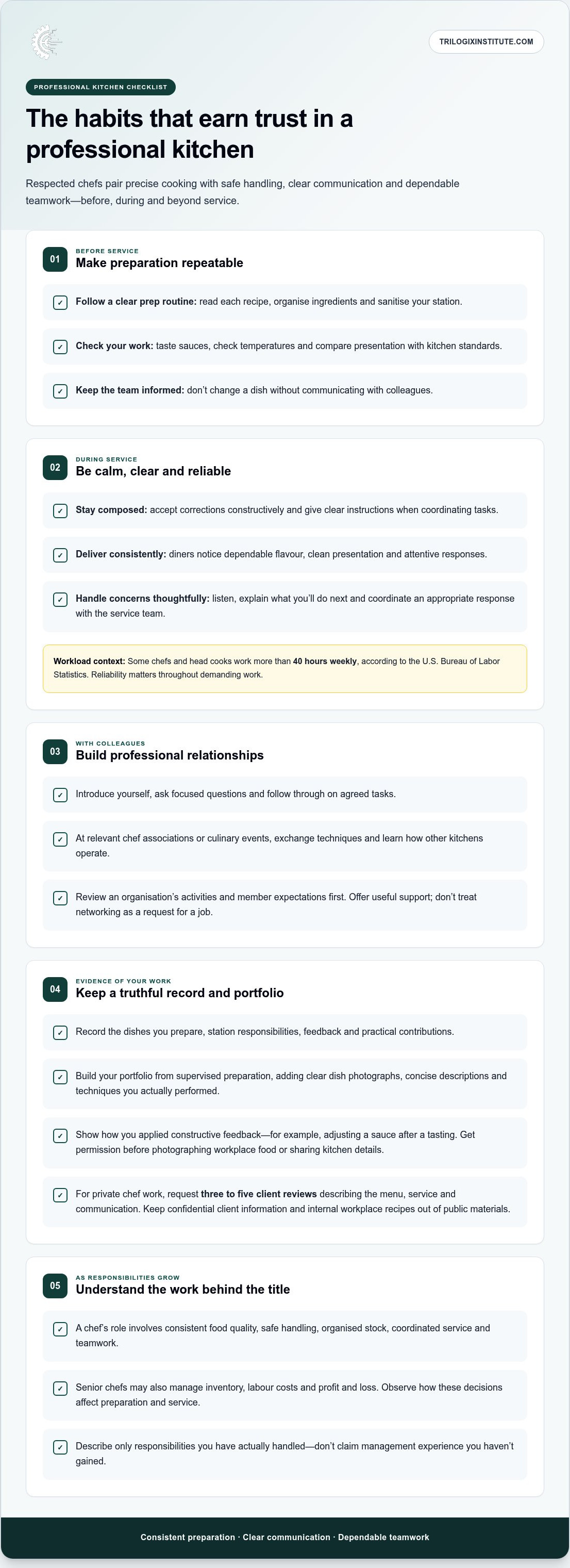
Set a repeatable preparation routine: read each recipe, organise ingredients, sanitise your station and taste sauces before service. Check temperatures and presentation against kitchen standards, and avoid changing a dish without communicating with the team. Some chefs and head cooks work more than 40 hours weekly, according to the U.S. Bureau of Labor Statistics. Reliability matters throughout that demanding work.
-
Develop Professional Relationships
Build professional relationships by introducing yourself to colleagues, asking focused questions and following through on agreed tasks. Participate in relevant chef associations or culinary events to exchange techniques and learn how other kitchens operate. Before joining an organisation, review its activities and member expectations. Avoid treating networking as a request for a job; offer useful support and maintain respectful communication.
-
Demonstrate Respected Chef Traits
Show colleagues that you stay calm during service, accept corrections constructively and give clear instructions when coordinating tasks. Diners value consistent cooking, clean presentation and attentive responses. If a guest raises a concern, listen carefully, explain what you’ll do next and coordinate an appropriate response with the service team.
- Keep a record of dishes prepared, station responsibilities, feedback and practical contributions. Get permission before photographing workplace food or sharing kitchen details. For private chef work, request three to five client reviews that describe the menu, service and communication. Use genuine feedback to show your strengths without making unsupported claims.
- Build your portfolio from real experience, starting with supervised preparation and adding work as your responsibilities grow. Include clear dish photographs, concise descriptions and examples of techniques you performed. Add constructive feedback and explain how you applied it, such as adjusting a sauce after a tasting. Keep confidential client information and internal workplace recipes out of public materials.
- Understand what a chef’s title involves: consistent food quality, safe handling, organised stock, coordinated service and teamwork. Senior chefs may also manage inventory, labour costs and profit and loss. Learn these duties by observing how decisions affect preparation and service. Record the responsibilities you have actually handled rather than claiming management experience you haven’t gained.
Formal culinary training and foundational techniques
Choose culinary education that develops practical technique alongside food-safety knowledge. In Dubai, compare course content, assessment methods and how the training supports your intended kitchen role.
-
Pursue Culinary Education
Choose a course with structured practice, instructor feedback and clear assessment of kitchen skills. Check the syllabus for cooking methods, ingredient handling, menu preparation and opportunities to repeat techniques. Demonstrations combined with supervised practice help connect culinary principles to service tasks. Look beyond the course title and check what you’ll learn to do.
-
Earn Recognised Qualifications
Compare the qualification’s awarding body, assessment requirements and relevance to the roles you want. Find out whether assessment involves practical tasks, written work or both, and keep records of completed modules. Employers may consider credentials alongside demonstrated skills and experience. Choose training with clearly explained outcomes rather than assuming every qualification has the same value in every kitchen.
-
Master Essential Culinary and Food-Safety Skills
Practise knife control, accurate weighing, heat management and basic cooking methods until you can produce consistent results. Apply food-safety principles when storing ingredients, preventing cross-contamination and maintaining a clean workstation. For example, keep raw ingredients separate from ready-to-eat foods and clean equipment between tasks. Strong foundations help you work safely, follow recipes accurately and catch problems before a dish reaches service.
- Use each practical session to test a technique, then record the result. Note ingredient quantities, cooking temperatures, timing, texture and adjustments. If a sauce splits, consider whether heat or technique caused the problem before trying again. This turns mistakes into specific learning points. Keep a dated practice log to track consistency and explain your progress in interviews.
- When budgeting for culinary education, compare tuition with course length, practical access, ingredients, uniforms and required equipment. Consider all these factors together before enrolling. Don’t choose solely by the lowest advertised fee; assess whether the course provides enough supervised practice. A salary estimate is not a guaranteed return, as earnings depend on the role and your experience.
- Use Dubai salary ranges as career context, not as a promise of income. A commis chef may earn AED 2,500-3,500 monthly, while a chef de partie may earn AED 5,000-8,000 monthly. Executive chef roles in luxury properties may reach AED 15,000-25,000+ monthly. To build relevant skills, explore the TTI Dubai Professional Culinary Arts course.
Specialising in and cross-training across kitchen stations
Master core methods first, then rotate through stations to understand how dishes move from preparation to service. Develop a distinctive style through deliberate choices in flavour and presentation without compromising consistency or kitchen standards.
-
Master Kitchen Fundamentals
Practise knife skills, seasoning, heat control and timing before adapting recipes to express your style. For example, prepare the same vegetable by roasting and sautéing, then compare its texture, colour and flavour. Check that each version meets kitchen standards before adding personal touches. Don’t rely on unusual ingredients or elaborate presentation to disguise uneven technique.
-
Cross-Train Across Kitchen Stations
Learn station routines under an experienced cook, beginning with preparation before taking on service tasks. A garde manger station develops precision with cold dishes, while the grill station demands control of heat and timing. Observe how the pastry section coordinates baking and plating with the rest of service. Claim proficiency only when you can follow a station’s workflow reliably under pressure.
- Record what each station needs before service and how its work connects to other roles. The sauce station, for example, must coordinate with cooks plating proteins and vegetables. Cross-training helps you anticipate handovers, communicate delays and support colleagues when orders arrive together. Note mise en place, equipment and finishing methods, then review them with the station lead.
- Choose a specialisation by comparing the tasks you enjoy with the standards each role demands. Pastry work suits cooks who value accurate measurement, controlled temperatures and careful decoration. Seafood work calls for confident ingredient handling and precise cooking. Test your interest through supervised shifts and focused practice rather than choosing a speciality solely for its reputation.
- Develop a signature approach through repeated testing, not sudden changes during service. Choose a flavour direction, such as citrus with herbs, and assess how it works in a starter, main course or dessert. Record ingredient choices, texture and presentation, then refine one element at a time. This connects creativity to sound technique and makes results easier to reproduce.
- Explore food entrepreneurship once you can deliver a clear, dependable offer. A pastry specialist might develop a small selection of celebration cakes, while a private chef could focus on tailored tasting menus. Define your audience, menu format and preparation workflow before investing time in promotion. Premium service depends on consistent execution, suitable presentation and attentive communication, not an impressive title.
Career advancement and changing kitchen settings
Advance by pairing stronger cooking skills with preparation, supervision and operational responsibility. In Dubai’s hospitality sector, experience across kitchen settings can help you identify where your strengths fit.
-
Advance Through Kitchen Brigade Roles
Build capability in your current role before seeking greater responsibility. A commis chef typically works at entry level during years 1-2 after graduation, while a chef de partie commonly reaches the mid-career stage in years 4-7. Use each position to learn station standards, service coordination and team communication. Avoid pursuing a title before you can reliably manage its daily work.
-
Develop Kitchen Supervision and Catering Skills
Take on practical coordination tasks, such as assigning preparation duties or checking supplies before a catering event. Supervision calls for clear instructions, calm decisions and attention to timing; catering also involves transport, setup and service logistics. Track what the team needs, communicate changes promptly and review problems after service. Catering is more than restaurant cooking in a different setting.
-
Prepare for Career Risks and Challenges
Plan for demanding schedules and protect time for recovery between shifts. A chef’s routine can stretch into 10-12-hour days and include weekend and holiday work. Long services, time pressure and poor rest can contribute to exhaustion and burnout. Notice when fatigue affects focus or safe work, and raise workload concerns through the appropriate workplace channels.
- Improve efficiency by preparing mise en place before service and checking it against the menu and expected workflow. Professional preparation may include cleaning, peeling and cutting vegetables before cooking begins. Organise tools and ingredients by task, label prepared items clearly and keep the workstation ready for handovers. These steps reduce avoidable interruptions and help the kitchen maintain a steady pace.
- Practise looking ahead during active service. Plan 10 steps ahead by identifying the next ingredients, equipment and timing needs before completing the current task. Preparation can take 8 hours for a 3-hour service window, so use prep lists to divide work and track completion. Focused planning helps prevent last-minute gaps without compromising consistency.
- Consider how different hospitality settings change the work. A hotel kitchen may coordinate several meal periods, while catering operations centre on a defined event, guest schedule and delivery plan. As your career develops, build evidence of leadership through completed duties, such as training a colleague or coordinating a preparation list. Reaching head or executive chef leadership can take 10-15+ years.
Steps to becoming a chef in Dubai
Build toward professional chef work by combining practical kitchen experience, food-safety awareness and focused applications. A clear progression helps you turn culinary ability into evidence employers can assess.
- Choose the kitchen environment you want to enter, such as a hotel, restaurant or catering operation. Compare menus and service styles to understand which techniques the role demands. Modern culinary scenes serve guests from diverse cultural backgrounds, so familiarity with varied ingredients and classic cooking methods can help you adapt. Use that range as a reason to keep learning, not as a claim of expertise.
- Build hands-on experience through an entry-level kitchen role, then take responsibility for specific preparation tasks. Starting as a kitchen helper or food preparation worker can help develop basic skills and lead toward assistant cook or line cook positions, according to industry standards. In each role, learn the kitchen’s workflow, follow directions accurately and ask for feedback on completed work.
- Prepare for food-handling expectations before applying. Proper municipal food handler certification is a standard employment requirement for professional kitchen work. Practise food safety every day: keep raw ingredients separate from ready-to-eat foods, clean equipment between tasks and follow workplace handling procedures. Record relevant training and experience accurately on your CV, and never claim a qualification you haven’t earned.
- Study employers’ menus before interviews. Visit three leading restaurants in your area, taste their food and, where appropriate, ask to meet the chef and see the kitchen. Notice how the menu combines ingredients, how dishes are presented and what service style the venue uses. Use those observations to prepare specific questions and explain how your skills could support that kitchen.
- Prepare a concise application that connects your experience to the job description. List your kitchen duties, stations, dishes prepared and relevant food-safety knowledge. Bring a portfolio with clear photographs of your own work and brief notes explaining your role in each dish. For a commis or line cook application, demonstrate dependable preparation skills rather than overstating your leadership experience.
- Use interviews to demonstrate that you’re ready for the work. Describe how you organise ingredients before service, respond to corrections and communicate with colleagues when priorities change. Ask clear questions about the role’s duties and reporting structure. Follow up professionally, continue applying to suitable openings and practise techniques relevant to the kitchens you’re targeting.
Strengthen your practical preparation through culinary training options as you work toward advanced chef roles.
Trilogix Institute: TTI Dubai Foundation Electrical Engineering
Trilogix Institute is a natural next step if you want structured culinary education alongside kitchen experience. For aspiring chefs, TTI Dubai Professional Culinary Arts is the relevant offering; TTI Dubai Foundation Electrical Engineering supports a different career direction. Choose culinary training when you want to strengthen practical skills and build a stronger foundation for kitchen work. Combine your learning with experience across stations, feedback from experienced colleagues and a record of dishes you’ve prepared. This approach connects formal study with the consistent practice required in professional kitchens. To explore the culinary course and decide whether it fits your next career step, contact Trilogix Institute.
Take Your Next Step Toward the Kitchen
A culinary career develops through deliberate practice and sound decisions about what to learn next. If you’re considering how to become a respected chef, choose a practical goal for your next stage, such as improving a technique, gaining experience in a new kitchen or pursuing formal culinary training. Consistent progress comes from applying what you learn and taking responsibility for your work.
For culinary study, Trilogix Institute offers TTI Dubai Professional Culinary Arts. Its other vocational offerings include TTI Dubai Foundation Electrical Engineering and TTI Dubai Advanced AutoCad 2D & 3D. Choose the direction that aligns with your goals and the skills you want to develop.
Contact Trilogix Institute about chef training to explore your next step. Build your craft steadily, and let the quality of your work speak for itself.
Frequently Asked Questions
How to Become a Chef?
To understand how to become a respected chef, choose a kitchen environment and role, then prepare for its practical demands. In an interview, describe a specific task you’ve completed, how you followed instructions and what you learned from feedback. Bring a concise record of relevant training and experience. If you’re new to professional kitchens, apply for entry-level preparation work where you can learn workplace routines and gain experience.
Is a chef a high-demand job?
Hospitality activity in the UAE creates opportunities across restaurants, hotels and catering, but tourism figures don’t directly measure chef vacancies. Tourism contributed roughly 14% of the UAE’s GDP in the context described for 2025, while UAE hotel guest volumes reached 23 million visitors that year. Consider these indicators alongside the type of kitchen, its location and the skills required. Demand differs by employer and role.
What Does a Professional Chef Do?
A professional chef prepares food while maintaining the kitchen’s standards for quality, timing and presentation. The work may also involve adapting dishes to service requirements, coordinating with colleagues and responding to diners’ requests. For example, a chef may need to adjust a preparation plan when an ingredient is unavailable while keeping the finished dish consistent with the menu. Seniority shapes the amount of planning and supervision involved.
What training or culinary qualifications are needed to become a chef?
Culinary training can provide structured instruction in cooking methods and professional kitchen practices, while workplace experience shows how those skills hold up during service. If you’re exploring how to become a respected chef, compare qualifications by their learning outcomes, practical assessments and credential details. Keep copies of course records and assessment results so you can explain what you studied and how it relates to the role.
What are the steps to progress from entry-level kitchen work to head chef?
Take on duties that demonstrate readiness for broader responsibility. Once you’ve learned your assigned tasks, ask to support shift handovers, coordinate a preparation list or help a colleague learn a routine. Record the responsibilities you’ve handled and their outcomes. For a future leadership role, develop decision-making alongside cooking skills, including how to prioritise tasks when service changes unexpectedly.
How long does it take to become a professional chef?
There’s no fixed timeline for becoming a professional chef; progress depends on training, experience and the responsibilities available in each workplace. Measure readiness through practical milestones, not dates: completing tasks accurately, managing a station’s workflow and adapting to feedback. Advancement also depends on opportunities to take on more complex duties. Review your progress with a supervisor and choose a specific skill to develop next.
What does culinary school cost, and is it worth it compared with learning on the job?
Course costs depend on the programme and its learning requirements. Compare tuition, materials and practical training before deciding. Formal study can provide structured instruction, while workplace learning develops skills through daily tasks. To assess value, compare what each route teaches with the roles you’re targeting. Consider the time you can commit to study, the feedback available and whether you need foundational instruction before applying for kitchen work.
What kitchen leadership and communication skills do respected chefs need?
Respected kitchen leaders give clear instructions, listen to colleagues and communicate changes before they disrupt service. Practise confirming responsibilities during handovers, giving task-specific feedback and asking a colleague to repeat a critical instruction when needed. During busy service, calm, direct communication helps the team understand priorities. Leadership also means acknowledging mistakes promptly and focusing on corrective action rather than blame.


