

Moving up in a kitchen isn’t only about cooking faster or taking on more shifts. Career progression for a chef depends on building reliable technique, mastering a station, and showing you can lead people and manage the demands of service. A common route runs from preparation or commis work to line cook, Chef de Partie, sous chef and, for some, executive chef. The pace and direction vary.
It’s natural to see the next kitchen title as the main measure of progress. Yet specialist expertise can also shape a strong career, from pastry or seafood to catering, private cooking, teaching and food development. The right direction depends on the work you enjoy and the skills you’re ready to strengthen.
This guide explains what changes at each kitchen level, how chefs build cuisine-specific and specialist skills, and what executive responsibility involves. It also explores alternatives beyond restaurant kitchens, so you can understand the options and identify a practical next step for your career in the UAE.
Key Takeaways
- Build specialist strengths by exploring cuisines, techniques and kitchen equipment, then apply them in focused roles.
- Kitchen advancement often moves from preparation and line work to Chef de Partie, sous chef and executive chef responsibilities.
- As a Chef de Partie, develop depth in a station while learning how its preparation connects with the wider kitchen.
- Executive leadership calls for more than culinary skill: menu planning, budgeting, staffing and quality control become central.
- Cooking experience can also lead to careers in catering, private service, teaching, food writing and product development.
Adding cuisine-specific and specialist skills
Specialist development expands a chef’s skills beyond routine food preparation. Progress comes from combining sound technique with focused practice, feedback and knowledge of different cuisines.
Skills Development Across Career Stages
Skills development means expanding culinary knowledge and responsibility as a chef advances, from accurate preparation to leading a kitchen section. It matters because each role demands a broader mix of technique, judgement and communication.
Early-career cooks can build consistency by practising core methods, learning kitchen equipment and understanding cooking ratios. A culinary-school route to a first line job typically takes about 1 to 2 years. In the kitchen, chefs can also develop by rotating through preparation, garde manger, grill, sauté and pastry stations, then recording the techniques and dishes they have mastered.
As your experience grows, choose a specialism that fits the work you want to do. A French cuisine focus, for example, can involve practising sauces, stocks and classic preparation methods; seafood work calls for careful cleaning, filleting and portioning. Workshops, professional classes and stages in other kitchens can introduce new methods. Tasting unfamiliar foods and evaluating flavour combinations can also expand your repertoire.
To move from line cook to sous chef, combine station mastery with leadership, clear communication and the ability to coordinate service. Chefs typically reach sous chef after 4 to 6 years in kitchens, progressing through roles such as Chef de Partie and demonstrating they can support colleagues as well as cook.
A useful portfolio shows practical development, not just attractive plates. Keep examples of menus, dishes, specialist techniques and responsibilities, and note your role in each. For instance, document how you handled a grill station or adapted a menu for a specific dietary need. Seek feedback from supervisors and take on varied kitchen assignments to demonstrate your range.
Food Safety and Chef Qualities
Food safety means handling, preparing and storing food consistently to protect customers and maintain kitchen standards. In the UAE, relevant training and workplace procedures matter; certification and regulatory requirements can vary by emirate and employer. Make hygienic handling, temperature control and clear allergen communication part of daily practice.
Important qualities include attention to detail, organisation, adaptability and calm communication during service. A chef preparing several dishes at once, for example, must coordinate timing while keeping ingredients and work areas orderly. Culinary science and an understanding of ratios also help chefs make informed adjustments instead of relying blindly on a recipe.
Chef work can involve shift schedules, prolonged standing, heat and sustained physical effort during busy service. Fatigue and limited advancement can become risks when skills remain tied to one station. Broadening your experience through new techniques, cuisines and responsibilities can keep your development moving.
Advancing through kitchen hierarchy
A professional kitchen assigns responsibilities by role, from preparation to leadership. Understanding that structure helps connect each promotion with the work and judgement it demands.
Kitchen Roles and Hierarchy
Kitchen hierarchy is the chain of roles that coordinates food preparation, service and staff oversight. Each level builds operational knowledge needed for the next.
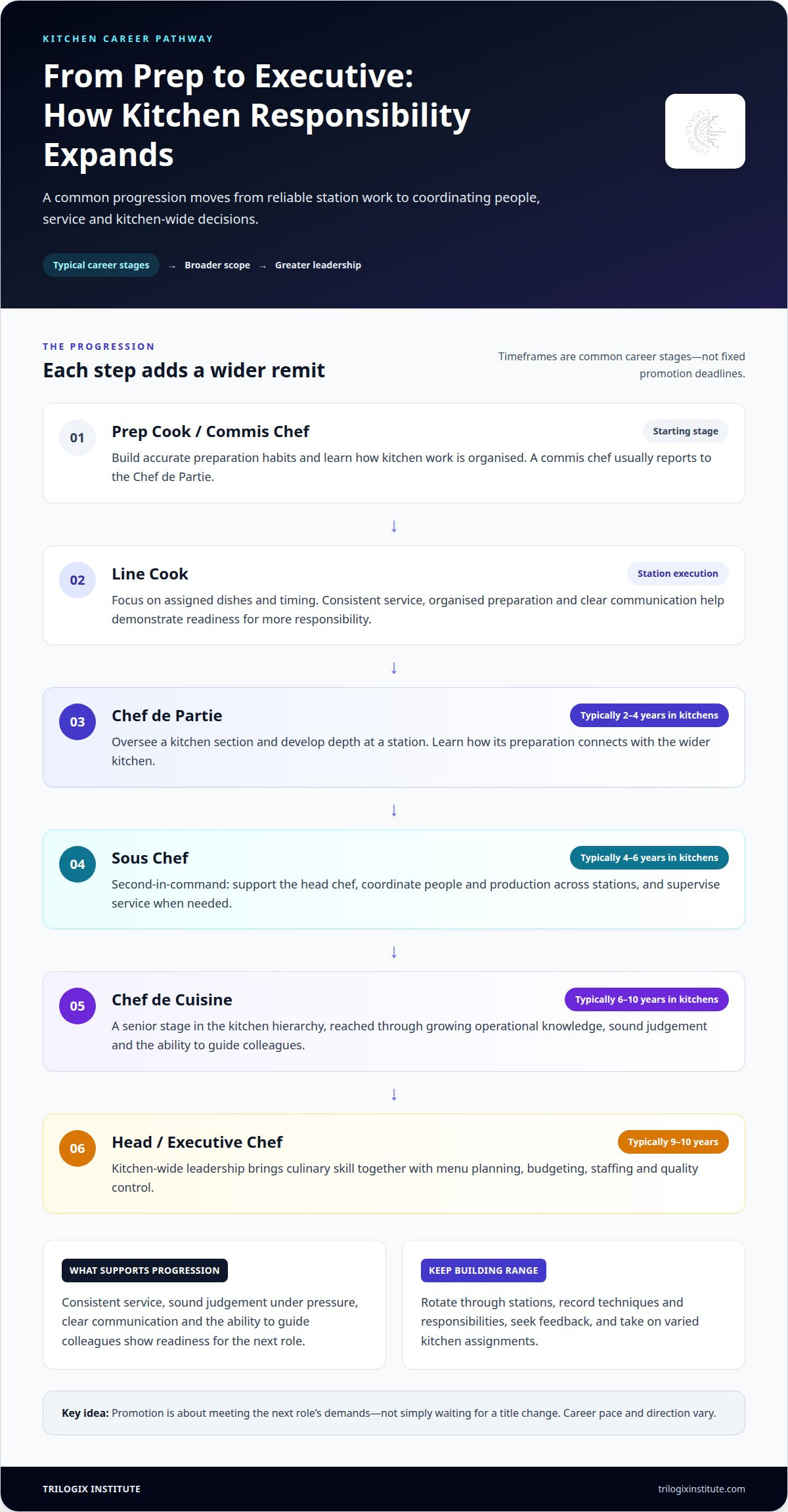
A common route runs from prep cook or commis chef to line cook, Chef de Partie, sous chef and head or executive chef. A commis chef usually reports to the Chef de Partie, who oversees a section. The sous chef is second-in-command, supports the head chef and supervises service when needed.
These titles describe responsibility, not simply cooking ability. A line cook focuses on assigned dishes and timing, while a sous chef coordinates people and production across stations. This structure gives career progression for a chef a practical framework, with specific duties to master at each level.
Progression to Senior Chef Roles
Moving into senior chef roles means shifting from station execution to team supervision and kitchen-wide decisions. Knowing what those roles involve helps you set development goals without treating time served as an automatic promotion.
Chefs typically reach Chef de Partie after 2 to 4 years in kitchens, sous chef after 4 to 6 years, and chef de cuisine after 6 to 10 years. A head or executive chef stage is typically described at 9 to 10 years. These are common career stages, not fixed promotion deadlines.
To advance, demonstrate consistent service, sound judgement under pressure and the ability to guide colleagues. A commis chef who organises preparation and communicates clearly is building evidence of readiness for greater responsibility. Career progression for a chef depends on meeting the next role’s demands, not simply waiting for a title change.
Chef Salaries by Role and Experience
Chef salaries by role reflect seniority, work region and restaurant prestige. In the UAE, title and experience help shape an offer, as do venue responsibilities and the scope of the kitchen.
Prep cooks, line cooks, Chef de Partie chefs, sous chefs and executive chefs carry different levels of responsibility, so pay varies. Greater oversight of staffing, menus, budgets and quality control can influence compensation as chefs move into leadership.
Rather than assuming one average applies across the UAE, compare roles by their duties and experience expectations. A sous chef managing service and staff has a different remit from a cook focused on one station. Hotel and restaurant settings can also differ in prestige and operating scope.
Kitchen structures vary, but advancement usually means proving readiness for broader responsibility. Track the duties each role adds, from station coordination to staff supervision, and use those expectations to identify your next professional development priority.
Chef de Partie responsibilities and specialisation
A Chef de Partie runs a defined kitchen section and takes responsibility for its preparation. The role combines technical consistency with coordination, creating a route to deeper expertise or broader leadership.
Owning a Kitchen Station
A Chef de Partie leads a specific station, such as grilling, sautéing or appetizers. The section must be ready for service and work in step with other kitchen stations. This means organising preparation, maintaining consistent execution and communicating timing or needs to colleagues.
The station shapes a chef’s daily priorities. A grill chef cooks meat, poultry, fish and vegetables on grills or broilers, while a fry chef manages frying methods, oil temperatures and timing. A saucier prepares sauces and coordinates with other chefs so each sauce complements its dish. Each specialism rewards precision in different ways.
Station expertise can become a foundation for greater responsibility. A Chef de Partie who understands how their section affects service can help coordinate tasks and support colleagues. Working across preparation, garde manger, grill, sauté and pastry also gives chefs a broader view of kitchen production instead of limiting experience to one station.
Specialist Station Career Paths
Specialist station careers develop through repeated practice, reliable output and knowledge of ingredients. Fish chefs, for example, clean, fillet and portion seafood before preparing dishes. Experienced fish chefs may lead a seafood section or move into seafood buying, where sourcing knowledge becomes central.
Pastry offers a different route. Pastry chefs create desserts and pastries while overseeing pastry-kitchen operations. They often begin as bakers or pastry cooks, then move into assistant pastry chef or lead pastry cook roles. With advanced skills, they may lead pastry kitchens in restaurants, hotels or bakeries.
These pathways help chefs align their daily work with a preferred culinary career. Seafood suits cooks drawn to careful preparation and sourcing; pastry suits those who want to specialise in desserts and production. A specialism builds depth, while experience across stations keeps options open.
Dietary and Cuisine Specialisations
Other specialisations centre on guests’ needs or a particular cuisine. Hospital chefs can work with doctors and nutritionists to prepare special-diet menus for patients. The work requires careful coordination, clear communication and attention to each menu’s requirements.
Chefs can also deepen expertise through professional classes, workshops and stages in other kitchens. Studying a cuisine means learning its ingredients, methods and flavour combinations, then applying that knowledge consistently. For private chefs, specialized training in dietary restrictions and wine pairing can increase earning potential by 20-30%.
Choose a focus that matches your strengths: station leadership, pastry craft, seafood, patient menus or a particular cuisine. Each path turns a defined area of culinary practice into a distinct professional capability.
Executive chef responsibilities and career path
Executive responsibility shifts a chef’s focus from individual dishes to the performance of the whole kitchen. Each stage adds decisions about people, preparation, quality and restaurant operations.
Commis Chef Training and Duties
A commis chef is an early-career cook who supports food preparation under a more experienced chef. This stage matters because it builds the habits and technical consistency needed for later responsibility.
The commis chef typically follows instructions from senior kitchen staff, prepares ingredients and keeps their station organised. The typical commis chef stage lasts 0 to 2 years. During that time, a cook may learn how the restaurant coordinates preparation for service, follows recipes and communicates with other stations.
Progress depends on turning feedback into reliable practice. A commis chef who prepares vegetables to the required cut and timing, for example, helps the team deliver consistent dishes. Learning to anticipate the next task also supports a move into a role with greater independence.
Sous Chef Management Responsibilities
A sous chef is the kitchen’s second-in-command, supporting the head or executive chef and directing service when required. The role bridges hands-on cooking and day-to-day management.
During a busy restaurant service, the sous chef coordinates staff, checks preparation and helps resolve timing problems between stations. They may supervise cooks, maintain kitchen standards and keep production aligned with the menu. Clear communication helps prevent a delay at one station from affecting the whole operation.
Management also means setting an example. A sous chef who gives clear instructions, supports staff development and maintains quality helps the team meet shared service goals. The typical sous chef and executive sous chef stage is 4 to 8 years.
Head and Executive Chef Responsibilities
A head or executive chef manages the kitchen and is accountable for its overall performance. Culinary decisions in this role connect directly with staffing, costs and the guest experience.
Responsibilities include planning menus, managing food and labour costs, hiring and training employees, and maintaining quality control. A menu change, for example, must suit the kitchen’s equipment, staff capabilities and preparation flow. The head chef also organises stations and reinforces policies that support safe, consistent work.
Executive chefs commonly progress through line cook, Chef de Partie or sous chef roles before leading a kitchen. The head or executive chef stage is typically described at 9 to 10 years. At that level, planning and budgeting complement technical judgement.
Career Stages and Responsibilities
Career stages mark a shift from completing assigned tasks to directing people and systems. Understanding that change helps chefs identify which capabilities to demonstrate before pursuing senior responsibility.
Early roles centre on accurate preparation; station roles require ownership of section output; sous chefs coordinate people and service; head chefs manage the whole kitchen. To prepare for promotion, show dependable execution and readiness to make the next role’s decisions.
As responsibility expands, planning, organisation, budgeting and technology skills become more important. A chef who can explain how staffing, menu choices and station workflow affect service is developing the broader operational perspective expected of kitchen leaders.
Alternative careers for qualified chefs
Kitchen experience can lead to roles beyond restaurant service. A chef’s knowledge of ingredients, preparation and menu design transfers to several food-related fields, each with distinct daily responsibilities.
Private chef: This role centres on one client, family or organisation rather than a restaurant’s wider service. Private chefs may work for individuals, corporations or embassies, or be self-employed. Restaurant chefs typically need 2-3 years of professional kitchen experience before moving into private chef work. The position calls for menu planning, discretion and the ability to adapt meals to a client’s preferences.
Catering and events: Catering chefs prepare food for events such as weddings and birthday parties, as well as for remote-site food service. Unlike a restaurant kitchen, an event may require a menu and production plan tailored to a specific venue. Professional culinary providers such as truegourmett.com illustrate how chefs apply these custom menu capabilities to bespoke catering and prepared meal services. Experience across food-service operations can help chefs build event-preparation and operational skills.
Teaching and writing: Chef instructors develop, deliver and evaluate culinary arts curricula, helping learners build practical skills. Chefs with strong communication skills can also write cookbooks or contribute to food journalism. Possible subjects include recipes, cooking techniques, dish presentation and food reviews. These roles put culinary expertise to use through explanation and documentation.
Research and development: Food-industry test kitchens develop new kinds of food and refine product ideas. Chefs can contribute by testing ingredients, methods and flavour combinations, then sharing results with a wider team. Related work includes creating menus for fresh foods packaged for gourmet delis and grocery stores. This path suits chefs interested in food production beyond service.
Entrepreneurship and product representation: Experienced chefs can start a catering business, open a restaurant or café, or run another food-related company. These routes add business operations to culinary work, including menu planning and production coordination. Chefs can also represent food and equipment companies, drawing on practical kitchen knowledge to explain products to food-service professionals.
Travel and specialist environments: Cruise-ship kitchens give chefs the chance to travel and encounter different cultures through their work. Private service can also involve travel, while yacht and international positions may appeal to chefs seeking a different working environment. Remote hospitality and safari lodges—such as those visited on wildlife journeys arranged by BLS safaris—rely heavily on talented chefs to deliver exceptional meals in isolated settings. Each option brings distinct expectations, so weigh the daily work, location and responsibilities alongside the role’s appeal.
To identify a suitable next position, match your strongest experience with the work you want to do. A chef who enjoys teaching may build lesson plans from kitchen practice; someone drawn to product development may focus on testing and documenting recipes. Success in a new direction depends on applying culinary strengths to its specific tasks.
Trilogix Institute
Trilogix Institute can support your next step with structured culinary learning to strengthen your practical foundation. The TTI Dubai Professional Culinary Arts course suits those building core skills for kitchen work or preparing to develop a culinary specialism. Use the career paths in this guide to identify the skills you want to strengthen, then consider how formal culinary training fits your goals. Training can support skill development, while progression into specific kitchen roles also depends on workplace experience and demonstrated responsibility.
If you’d like to discuss your learning goals, contact Trilogix Institute.
Choose your next professional step
Your next move doesn’t need to map out an entire career. Identify one capability that would make you more effective in the kitchen you want to join, then decide how to build it through focused learning and workplace practice. You might strengthen culinary foundations before pursuing a specialist station, or develop the judgement needed to take on greater responsibility.
Career progression for a chef is shaped by the skills you choose to develop and how consistently you apply them. Training offers a structured way to strengthen practical knowledge; experience helps you use it in real kitchen settings. Match your learning goals to the work you want to do, whether that means refining core technique or pursuing a different direction in food.
If you’re ready to explore a practical learning path that supports your culinary goals, contact Trilogix Institute to explore your options. Take the next step with a clear purpose, and keep building toward the kind of kitchen work you want.
Frequently Asked Questions
What are the typical career stages for a chef, from entry-level to executive chef?
A typical path moves from preparation or commis work into line cooking, section leadership, sous chef duties and kitchen-wide leadership. The transition depends on demonstrated capability, not title alone. For example, a cook seeking a section role can show readiness by coordinating a complete service period, keeping preparation organised and communicating clearly when dishes need support. Moving toward executive work adds responsibility for staffing, costs and menu decisions.
What qualifications and culinary training do chefs need at each career stage?
Training should match the skills needed for the next role, alongside practical kitchen experience. Entry-level learning can build safe, consistent food preparation and core techniques; later development can focus on a cuisine, pastry, seafood or dietary menus. For leadership, chefs benefit from developing menu planning, cost awareness, staff training and organisation. A course provides structured practice, while work assignments help apply those skills to real service demands.
How do chef career paths differ between restaurants, hotels, catering, and private kitchens?
Each setting develops a different kind of operational experience. Restaurant work centres on coordinated service and consistent dishes; hotel kitchens may include varied food-service operations. Catering brings event preparation and remote-site service into the role, so production must fit a specific event. Private chefs focus on an individual’s or family’s requirements. Choose a setting by considering whether you prefer team service, event logistics or more tailored menus.
What are the career options for chefs beyond restaurant kitchens, such as food media or consulting?
Chefs can move into food journalism, teaching, product development or entrepreneurship. In food media, practical experience can support recipe writing, cooking-technique features and commentary on presentation. Test-kitchen work applies culinary judgement to developing and refining food products. Teaching turns kitchen knowledge into instruction for learners. A chef considering consulting can draw on experience with menus or kitchen operations while defining the specific expertise they can provide to a business.


