

The most impressive course title isn’t always the one that builds the skills you need. If you’re searching for a professional culinary course, compare how much of the learning involves practical work, not just what the programme is called.
Course options can be difficult to compare because vocational training, academic study and hobby classes may all teach cooking, but differ in structure, practical focus and purpose. This guide explains how to assess hands-on learning, compare different routes and choose training that fits your experience and goals.
Look beyond the course title to the learning objectives, teaching format and opportunities to practise. Trilogix Institute’s Professional Culinary Arts training is instructor-led and equipment-based, offering structured vocational learning. Training can support your preparation, but it doesn’t guarantee a job or a particular credential. Use the guidance below to make a choice based on what you want to learn and where you want to go next.
Key Takeaways
- Choose a professional culinary course Dubai option by the practical skills it develops, not its title alone.
- Review the published learning objectives to see whether they address safe practice, preparation, technique and organised kitchen workflow.
- Compare vocational training, hobby classes, specialist learning and academic study by purpose and structure.
- Clarify your goals and starting point, then assess how much hands-on practice the course includes.
- Trilogix Institute’s Professional Culinary Arts training is instructor-led and equipment-based, supporting practical vocational skill development.
Why Choose a Professional Culinary Course for Career-Focused Skills?
A professional culinary course is structured learning designed to develop practical, transferable kitchen skills. Rather than focusing only on preparing one dish, it can help learners practise repeatable techniques and apply them to different tasks. The aim is to build capability: understanding how to approach a task, practise it and improve through feedback.
This structure distinguishes vocational instruction from a casual cooking class or self-directed practice at home. A hobby class may be ideal for learning a recipe or exploring an interest, while independent practice offers flexibility. Professional training adds a learning sequence and instructor guidance. In an equipment-based programme, learners also practise using kitchen equipment as part of a supervised learning environment. Options for a professional culinary course Dubai search can serve different purposes, so compare what learners actually do, not just the title.
Training can develop culinary skills, but it cannot guarantee employment, a specific job or a particular career outcome. A course is one part of preparation; experience, performance and available opportunities also shape what comes next. Choose training for the skills and direction it can help you build, not as a promise of a job title.
Who benefits from structured culinary training?
Structured learning can help aspiring cooks who want a systematic start instead of relying on scattered tips or recipes. It may also suit career changers who prefer guided practice and a clear learning path as they explore professional kitchen work. Learners have different starting points and goals, so look for a course that matches the skills you want to develop rather than assuming everyone needs the same pace or destination.
What does professional learning add beyond cooking at home?
Home cooking is useful practice, but it can leave you to decide what to repeat and how to measure progress. Guided training makes practice more deliberate: an instructor can observe your approach, identify a technique gap and help you work on a correction. Repeating a method with feedback can help you understand what contributes to a consistent result, rather than relying on trial and error alone.
Professional culinary learning also places individual tasks in a broader context. The Culinary Arts overview describes a field that includes food preparation, technique and the work of chefs. For learners, that means looking beyond whether a dish tastes good: technique, care and an organised approach all matter in kitchen work. Course content varies, so assess the stated learning objectives instead of assuming every programme covers the same material.
At Trilogix Institute, professional culinary arts training is instructor-led and equipment-based, providing a structured route to practise vocational skills. It offers guided instruction and engagement with equipment, rather than self-directed online study. This may suit learners seeking practical development, while the right next step depends on their current skills and goals.
What Should a Professional Culinary Course Teach in Practice?
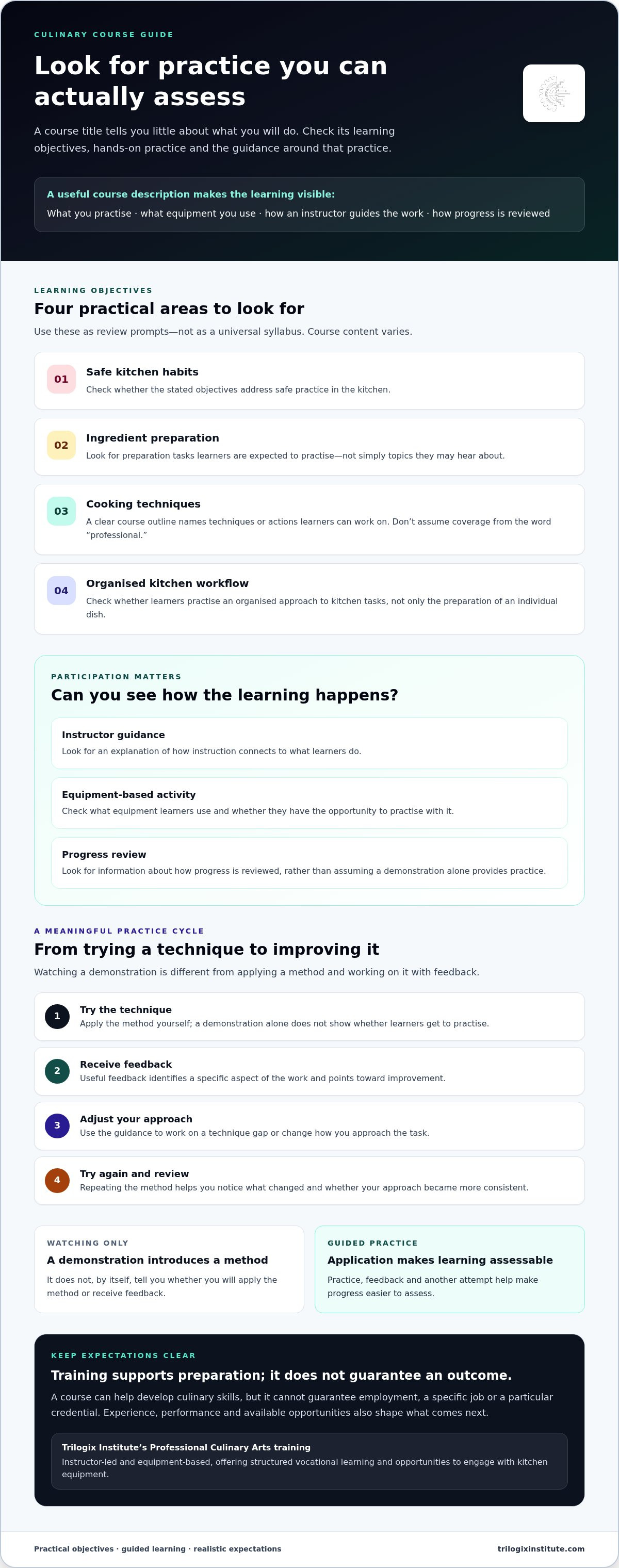
Course titles rarely explain what learners will practise. Review the published learning objectives to understand the intended skills and how they relate to your goals. Look for clear descriptions of practical learning rather than assuming a programme covers particular techniques or subjects because it is labelled “professional”.
When comparing a professional culinary course Dubai option, look for objectives that describe practical areas such as safe kitchen habits, ingredient preparation, cooking techniques and organised workflow. These are useful markers because they name actions learners can practise, not just information they may hear about. Treat them as a checklist for reviewing a course, not a universal syllabus.
A practical course should make clear what learners practise, what equipment they use, how instructors guide the work and how progress is reviewed. This checklist helps you distinguish a structured learning experience from a broad course description that says little about learner participation.
How can learners recognise meaningful kitchen practice?
Look for specific information about instructor-led, equipment-based activities. A demonstration can introduce a method, but watching alone doesn’t tell you whether you’ll have an opportunity to apply it. A useful course description explains how instruction connects with learner practice, rather than presenting demonstrations as the entire experience.
Practice is more informative when learners can try a technique, receive feedback, adjust their approach and try again. This cycle makes progress easier to assess: you can identify what changed and whether your method became more consistent. Feedback is most useful when it points to a specific aspect of the work, such as an inefficient movement or an inconsistent result, and gives direction for improvement. These are examples of what practical instruction might address, not claims about a particular course syllabus.
For an external reference on professional development in the field, the American Culinary Federation (ACF) offers resources for culinary professionals. Use such references to broaden your understanding, and assess a course by its own stated objectives and approach to practice.
How do cookery and pastry learning goals differ?
Cookery and pastry are distinct areas, and the kinds of practice learners need depend on their intended focus. Someone interested in savoury dishes may prioritise different techniques from a learner drawn to pastry, where precision and consistency can be central. These are broad distinctions, so review each programme’s actual learning objectives.
Before choosing, name the skills you want to strengthen and compare them with the course focus. If you haven’t settled on a direction, a broader culinary arts route may help you build a foundation before specialising. Trilogix Institute’s Professional Culinary Arts training is instructor-led and equipment-based. Explore this training as you consider which learning approach fits your next step.
Professional Culinary Course vs Hobby Class or Academic Study
The right learning route depends on what you want from culinary study. A focused class can be useful for personal enjoyment, while a structured vocational programme may suit learners seeking applied skills. Academic study offers a different kind of depth and progression. Compare purpose, learning structure and practical emphasis before choosing; no route is automatically best for everyone.
| Learning route | Purpose | Structure and practical emphasis | Possible progression |
|---|---|---|---|
| Vocational training | Develop applied skills for a professional direction. | Structured instruction with practical learning; the amount and type of practice vary by programme. | Build vocational capability or prepare for a next learning or career step. |
| Hobby class | Explore cooking for personal interest or enjoyment. | Often centred on a specific activity, recipe or experience, with scope shaped by the class. | Continue as a personal interest or take further classes. |
| Short specialist learning | Focus on a defined area or skill. | Narrower scope, with practice directed at the chosen subject. | Add a targeted skill or explore an area before committing to broader study. |
| Academic study | Pursue broader formal education and structured progression. | May combine practical learning with wider study; the balance depends on the programme. | Continue through further formal study or related pathways. |
These are broad distinctions, not fixed rules. Course structure and learning outcomes differ, so use the table to identify a route that matches your goals, desired depth and preferred format. For a wider discussion of vocational and academic routes, see this vocational training versus university degree guide.
When is vocational culinary training a better fit?
Vocational training can suit learners who prioritise applied skills and instructor-led practice. It offers a structured route focused on capabilities relevant to a field, rather than a university degree. These routes have different educational aims. Consider vocational training if practising and developing skills is central to your goal, without assuming it guarantees a faster route to employment.
When might a hobby or academic route suit better?
A hobby class may be right if you want to enjoy cooking, explore a technique or learn in a less career-focused setting. Academic study may better match learners seeking broader formal education or a defined route into further study. Short specialist learning can suit someone who wants to focus on one area. Choose according to the depth, structure and progression you need, not prestige alone.
Trilogix Institute’s Professional Culinary Arts training is instructor-led and equipment-based. This format can suit learners seeking guided, hands-on skill development. Compare it with a hobby class, specialist learning or academic study to decide which structure fits your goals.
How to Choose a Professional Culinary Course That Fits Your Goals
A useful course comparison starts with your priorities, not the most attractive title or longest feature list. For a professional culinary course Dubai search, separate essentials from extras: the skills you want to build, the course focus and the practical learning format. Use these steps to compare options with purpose.
- Define your goal. Decide whether you want personal enrichment, foundational culinary skills or professional development. This clarifies how structured and in-depth your learning needs to be.
- Assess your starting point. Consider what you can already do and where you need guidance. A beginner may value structured instruction, while someone with experience may want to strengthen a particular area.
- Select a focus. Identify the culinary direction or general skills you want to develop. Compare that aim with the course’s stated objectives instead of assuming the title tells you what it covers.
- Inspect the practical learning. Look for clear information on how instruction connects with learner participation and equipment-based practice. Active, guided learning matters if you want to apply skills, not only study concepts.
- Review the overall fit. Weigh the structure, focus and learning format against your goals. Treat appealing extras as secondary if they don’t support the skills you set out to develop.
Match your learning route to your intended outcome
Your intended outcome should guide the level and focus of a course. Personal enrichment may call for a different format from foundational skills or career-focused development. If you’re exploring professional culinary skills, prioritise practical learning aligned with that aim. Training can develop capability, but it doesn’t determine a specific job title, credential or employment result.
Assess the course structure and learning environment
Read the stated objectives and teaching format closely. Look for an explanation of what learners do, how instruction supports practice and how equipment-based learning fits into the experience. A description focused only on topics may not give you enough information to judge its practical approach. For a visual sense of culinary learning environments, explore the culinary training gallery.
At Trilogix Institute, professional culinary arts training is instructor-led and equipment-based. This structure can suit learners seeking guided vocational practice. Use the criteria above to decide whether it matches your goals and preferred way of learning.
Explore culinary course options and compare the training focus with the skills you want to build next.
Build Practical Culinary Skills Through Trilogix Institute
Once you’ve compared learning routes, objectives and practical emphasis, consider how a programme’s teaching model matches your priorities. Trilogix Institute offers professional culinary arts training through instructor-led, equipment-based learning. This provides a structured vocational route for learners who want practical skill development as part of their culinary education.
If you’re searching for a professional culinary course Dubai, assess the learning experience behind the programme description. Instructor-led teaching provides structure, while equipment-based training connects instruction with practical work. These features matter if you want to develop applied skills through guided learning rather than rely only on independent study.
What to expect from an instructor-led, equipment-based approach
Instructor-led learning provides a guided structure. Equipment-based practice adds an applied dimension, giving learners the opportunity to engage with training equipment as part of their learning. Together, these elements can make the format relevant to someone seeking vocational skills.
Use the criteria from your course comparison to assess fit. Does the approach align with your intended outcome? Does the practical focus match the skills you want to develop? Do you prefer structured instruction and equipment-based practice? These questions connect the learning format to your needs without assuming one route suits everyone. For a deeper programme overview, read the professional culinary arts training guide.
Turn course research into a clear next step
Before moving forward, write down your intended outcome, the practical skills you want to build and the learning format that works for you. Compare these priorities with the programme information. This keeps your decision grounded in course fit rather than attractive but less relevant features.
Trilogix Institute’s Professional Culinary Arts training is an option for learners seeking instructor-led, equipment-based vocational learning. Review the culinary course information and consider how it aligns with your goals. Training can support skill development, but it doesn’t guarantee employment, a particular role or a specific career outcome.
Ready to take the next course-selection step? Explore Trilogix Institute and continue your research with your learning priorities in mind.
Take Your Next Step with Purpose
Your next move doesn’t need to settle your entire career direction. Start by identifying one practical skill you want to strengthen and the kind of learning environment that will help you practise it. That gives you a clear basis for reviewing a professional culinary course Dubai option and deciding whether its approach suits your current goals.
For learners who value guided vocational development, Trilogix Institute’s culinary training combines instructor-led teaching with equipment-based practical learning. Consider these features alongside your intended outcome and the programme information. Training can support skill development, but employment and career outcomes depend on more than a course alone.
When you’re ready to explore a practical next step, Explore Trilogix Institute’s culinary training. Focus on the skills you want to build and choose a course that fits your goals.
Frequently Asked Questions
How long does a professional culinary course take?
There’s no standard duration for every professional culinary course Dubai learners may consider. A focused course and a broader vocational programme can differ in scope and learning hours. Compare the stated duration with the objectives and amount of practical learning instead of choosing by length alone. The programme details should explain what the study period covers, helping you judge whether it fits your goals and availability.
Do I need cooking experience before taking a professional culinary course?
Not necessarily. Some learners start with basic kitchen familiarity, while others bring experience from home cooking or related work. Note what you already know and what you want to learn, such as working more confidently with unfamiliar equipment or developing consistent methods. Then compare your starting point with the course’s stated focus and entry information to judge whether the learning suits your current skills.
Can a professional culinary course help me change careers?
It can support a career change by helping you develop relevant culinary skills and giving you a structured way to explore the field. For example, someone moving from retail or office work can use training to build familiarity with professional culinary tasks before pursuing opportunities. A course is one part of a transition, not a job offer. Your experience, readiness and employers’ requirements also influence the roles you may pursue.
What is the difference between culinary arts and culinary management?
Culinary arts centres on preparing food and developing related practical skills. Culinary management focuses more on coordinating a food business, including organising people, resources and service processes. The areas can overlap, but suit different interests. If you want to develop food preparation skills, compare culinary arts objectives; if you’re drawn to operational leadership, look for management-focused study.
Can a professional culinary course focus on pastry instead of cookery?
Yes, some culinary learning routes are dedicated to pastry, while others cover broader cookery or culinary arts. The distinction affects what you practise and how closely a course aligns with your intended direction. If pastry is your goal, look for a programme description that identifies pastry as its focus and explains the learning outcomes. Don’t assume a general culinary course provides the same depth in every specialisation.
Does completing a culinary course guarantee a chef job?
No. Completing a culinary course doesn’t guarantee a chef position, employment or a particular career outcome. Training can help you develop relevant skills, but hiring decisions depend on factors such as an employer’s needs, your experience and how you perform in the selection process. Treat a course as preparation and skill development. Build your next steps around the roles you’re interested in and the capabilities those roles call for.


